
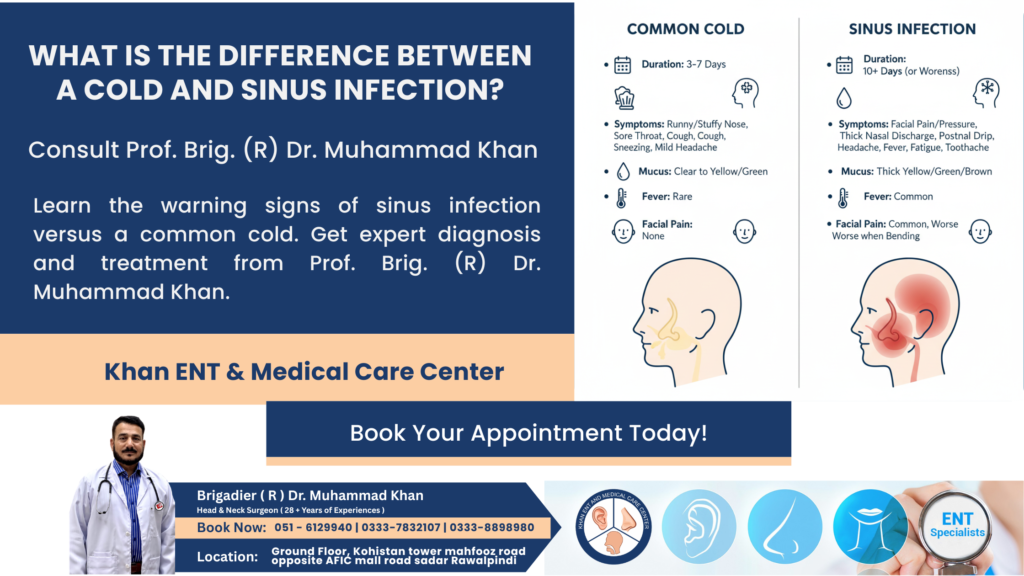
What is the difference between a Cold and Sinus infection? This is one of the most frequently searched questions by people suffering from a blocked nose, facial pressure, headache, cough, or thick nasal mucus. While a common cold and a sinus infection (sinusitis) share many symptoms, they are not the same condition. Understanding what is the difference between a Cold and Sinus infection helps you choose the right treatment, avoid unnecessary antibiotics, and know when it is time to consult an ENT specialist.
Many people assume that every prolonged cold is simply a stubborn virus. However, when symptoms persist beyond 10 days, worsen after initially improving, or are accompanied by facial pain and thick yellow or green nasal discharge, you may actually be dealing with a sinus infection. Early diagnosis and expert ENT care can prevent complications and chronic sinus disease.
What Is a Common Cold?
A common cold is a viral infection affecting the upper respiratory tract, particularly the nose and throat. More than 200 viruses can cause the common cold, with rhinoviruses being the most common.
Since a cold is caused by viruses, antibiotics do not work against it. Most colds improve naturally within one week.
Common Cold Symptoms
- Runny nose
- Stuffy nose
- Sneezing
- Mild sore throat
- Mild cough
- Low-grade fever (more common in children)
- Watery eyes
- Mild headache
- Fatigue
- Body aches
Symptoms usually improve gradually within 5 to 10 days.
What Is a Sinus Infection?
A sinus infection, medically known as sinusitis, occurs when the tissues lining your sinuses become inflamed and swollen. The inflammation blocks the normal drainage of mucus, allowing bacteria, viruses, or fungi to multiply.
A sinus infection often begins after a common cold but continues long after the viral illness should have resolved.
Sinus infections are classified into:
- Acute sinusitis (less than 4 weeks)
- Subacute sinusitis (4–12 weeks)
- Chronic sinusitis (more than 12 weeks)
- Recurrent sinusitis (multiple episodes each year)
What Is the Difference Between a Cold and Sinus Infection?
If you are wondering what is the difference between a Cold and Sinus infection, the easiest way to remember is this:
| Common Cold | Sinus Infection |
|---|---|
| Caused by viruses | May be viral, bacterial, fungal, or allergy-related |
| Lasts 5–10 days | Usually lasts longer than 10 days |
| Clear nasal discharge | Thick yellow or green mucus |
| Sneezing is common | Facial pain is common |
| Mild headache | Pressure around eyes, cheeks, and forehead |
| Rarely causes tooth pain | Upper tooth pain is common |
| Facial pressure is uncommon | Significant facial pressure |
| Usually improves on its own | May require ENT evaluation and treatment |
This comparison clearly explains what is the difference between a Cold and Sinus infection and why persistent symptoms should never be ignored.
Why Does a Cold Turn Into a Sinus Infection?
Many sinus infections begin as an ordinary cold.
Here’s what happens:
A cold virus causes swelling inside the nose.
The swollen tissues block the sinus openings.
Mucus becomes trapped inside the sinuses.
Bacteria begin multiplying inside the trapped mucus.
A bacterial sinus infection develops.
This is why many patients feel better for a few days before suddenly becoming much worse.
Symptoms That Suggest You Have a Sinus Infection Instead of a Cold
The following symptoms strongly indicate sinusitis:
- Facial pressure
- Pain over the cheeks
- Pain around the eyes
- Forehead pain
- Thick yellow mucus
- Green nasal discharge
- Persistent blocked nose
- Bad breath
- Reduced smell
- Toothache in the upper jaw
- Postnasal drip
- Persistent cough
- Symptoms lasting over 10 days
If several of these symptoms occur together, the answer to what is the difference between a Cold and Sinus infection becomes much clearer.
How Long Does Each Condition Last?
Common Cold
- Begins gradually
- Peaks within 2–3 days
- Improves within 7–10 days
- Usually completely resolves
Sinus Infection
- Often starts after a cold
- Symptoms continue beyond 10 days
- May worsen after initial improvement
- Can last several weeks
- Chronic sinusitis lasts over 12 weeks
Duration is one of the biggest clues when determining what is the difference between a Cold and Sinus infection.
Causes of Sinus Infections
A sinus infection may result from:
- Viral infections
- Bacterial infections
- Allergies
- Nasal polyps
- Deviated nasal septum
- Fungal infections
- Air pollution
- Smoking
- Weak immune system
People with allergies and structural nasal problems are much more likely to develop chronic sinusitis.
Risk Factors
You are at greater risk if you have:
- Allergic rhinitis
- Asthma
- Nasal polyps
- Deviated septum
- Frequent colds
- Smoking habit
- Diabetes
- Reduced immunity
- Previous sinus infections
Can a Cold Cause a Sinus Infection?
Yes.
A viral cold is one of the leading causes of acute sinusitis. When swelling blocks normal sinus drainage, bacteria multiply within trapped mucus, resulting in a bacterial sinus infection.
Fortunately, not every cold progresses into sinusitis.
How Doctors Diagnose the Difference
An ENT specialist diagnoses sinusitis by evaluating:
- Duration of symptoms
- Facial tenderness
- Nasal examination
- Nasal endoscopy
- CT Scan of the sinuses (if chronic or recurrent)
- Allergy assessment when indicated
Unlike self-diagnosis, an ENT examination can identify hidden causes such as nasal polyps or a deviated septum.
Home Remedies That Help Both Conditions
Whether you have a cold or sinusitis, these measures provide relief:
- Stay hydrated
- Sleep well
- Use saline rinses
- Avoid cigarette smoke
- Use a humidifier
- Eat nutritious foods
- Apply warm compresses over the face
These supportive measures improve mucus drainage and reduce congestion.
When Should You See an ENT Specialist?
Seek medical attention if:
- Symptoms persist longer than 10 days
- Facial swelling develops
- Severe headache occurs
- Vision changes develop
- High fever persists
- Thick nasal discharge continues
- You have repeated sinus infections
- Loss of smell lasts several weeks
- Symptoms keep returning
Early ENT evaluation helps prevent chronic sinus disease and unnecessary antibiotic use.
Why Choose Prof. Brig. (R) Dr. Muhammad Khan in Rawalpindi?
If you are searching for an experienced ENT surgeon for persistent sinus problems, Prof. Brig. (R) Dr. Muhammad Khan is one of the most trusted names in Rawalpindi and Islamabad.
At Khan ENT & Medical Care Center, Rawalpindi, patients receive comprehensive diagnosis and treatment for:
- Acute sinus infections
- Chronic sinusitis
- Nasal blockage
- Deviated nasal septum
- Nasal polyps
- Allergic rhinitis
- Endoscopic sinus surgery (FESS)
- Ear, nose and throat disorders
- Head and neck conditions
Why Residents of Rawalpindi & Islamabad Prefer Prof. Brig. (R) Dr. Muhammad Khan
- More than 30 years of ENT surgical experience
- Senior ENT & Head and Neck Surgeon
- Former Professor of ENT
- Retired Military Consultant
- Expertise in advanced endoscopic sinus surgery
- Evidence-based treatment plans
- Modern diagnostic facilities
- Personalized patient care
- Ethical medical practice
- Trusted by thousands of patients across Rawalpindi and Islamabad
Preventing Sinus Infections
You can reduce your risk by:
- Washing hands regularly
- Treating allergies promptly
- Staying hydrated
- Avoiding smoking
- Using saline nasal rinses
- Managing nasal polyps
- Treating a deviated septum when recommended
- Avoiding close contact with sick individuals
- Getting enough sleep
- Maintaining a healthy immune system
Frequently Asked Questions (FAQs)
What is the difference between a Cold and Sinus infection?
A cold is a viral infection that usually resolves within 7–10 days, while a sinus infection causes inflamed sinuses, facial pressure, thick mucus, and symptoms lasting longer than 10 days.
Can a cold turn into a sinus infection?
Yes. Swelling from a viral cold can block the sinuses, allowing bacteria to grow and cause a sinus infection.
How long does a sinus infection last?
Acute sinus infections may last up to four weeks, while chronic sinusitis persists for more than 12 weeks.
Does green mucus always mean a sinus infection?
Not always. Green or yellow mucus can occur during viral infections, but persistent thick discolored mucus with facial pain lasting more than 10 days suggests sinusitis.
Are antibiotics necessary for every sinus infection?
No. Many sinus infections are viral and improve without antibiotics. An ENT specialist can determine if antibiotics are appropriate.
When should I see an ENT specialist for sinus problems?
Seek evaluation if symptoms last more than 10 days, recur frequently, or are associated with severe facial pain, swelling, or vision changes.
Can allergies cause sinus infections?
Yes. Allergies can block sinus drainage and increase the risk of developing sinusitis.
What is Functional Endoscopic Sinus Surgery (FESS)?
FESS is a minimally invasive procedure that removes sinus blockages and restores normal drainage in patients with chronic or recurrent sinusitis.
Is a sinus infection contagious?
The infection itself is usually not contagious, but the viral cold that may have triggered it can spread to others.
Where can I get expert sinus treatment in Rawalpindi?
Residents of Rawalpindi and Islamabad can consult Prof. Brig. (R) Dr. Muhammad Khan at Khan ENT & Medical Care Center for comprehensive diagnosis and advanced treatment of sinus infections and other ENT conditions.