
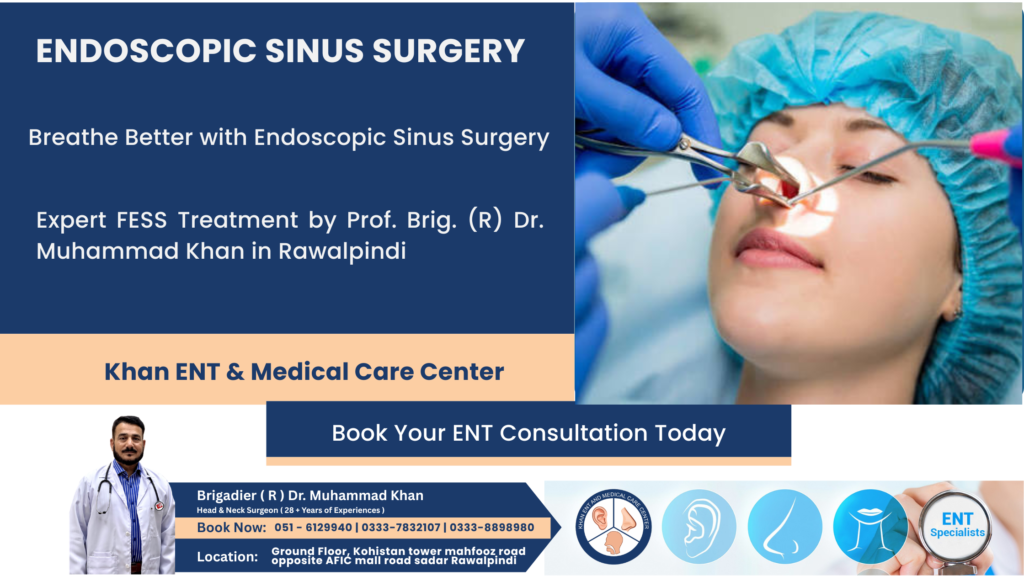
Endoscopic Sinus Surgery
Endoscopic Sinus Surgery is one of the most effective and advanced treatments for patients suffering from chronic sinusitis, nasal polyps, recurrent sinus infections, and blocked sinus passages that do not improve with medications. Endoscopic Sinus Surgery, also known as Functional Endoscopic Sinus Surgery (FESS), is a minimally invasive procedure that restores normal sinus drainage, improves breathing, reduces infections, and significantly enhances quality of life. Unlike traditional sinus surgery, Surgery is performed entirely through the nostrils using specialized endoscopes, leaving no external cuts or facial scars.
If you have persistent nasal blockage, facial pain, postnasal drip, headaches, recurrent sinus infections, or nasal polyps despite prolonged medical treatment, Surgery may be the best solution to restore healthy sinus function.
What is Endoscopic Sinus Surgery?
Endoscopic Sinus Surgery is a minimally invasive surgical procedure performed using a thin telescope called a nasal endoscope. The endoscope allows the ENT surgeon to clearly visualize the nasal cavity and sinus openings on a high-definition monitor.
Using delicate surgical instruments, the surgeon removes inflamed tissue, nasal polyps, infected material, or small pieces of bone that block the natural drainage pathways of the sinuses. The objective of surgery is to restore normal airflow and drainage while preserving as much healthy tissue as possible.
Since the surgery is performed through the nostrils, there are:
- No facial incisions
- No visible scars
- Less pain
- Faster recovery
- Better long-term outcomes
Who Needs Endoscopic Sinus Surgery?
Most sinus infections improve with medications. However, surgery may be recommended when symptoms persist despite proper medical treatment.
You may require Surgery if you have:
- Chronic sinusitis lasting more than 12 weeks
- Recurrent sinus infections
- Nasal polyps
- Blocked sinus drainage pathways
- Persistent facial pain or pressure
- Severe nasal obstruction
- Difficulty breathing through the nose
- Thick postnasal drip
- Reduced or complete loss of smell
- Fungal sinus infections
- Sinus mucoceles
- Cerebrospinal fluid (CSF) leaks
- Selected benign nasal and sinus tumors
Symptoms That May Indicate You Need Endoscopic Sinus Surgery
Patients commonly experience:
- Constant blocked nose
- Nasal congestion
- Thick yellow or green mucus
- Postnasal drip
- Facial pain
- Headaches
- Pressure around the eyes
- Frequent sinus infections
- Bad breath
- Loss of smell
- Snoring
- Sleep disturbances
- Mouth breathing
- Chronic cough
Conditions Treated with Endoscopic Sinus Surgery
Chronic Sinusitis
The most common reason for Surgery is chronic sinusitis that does not respond to medical treatment.
Nasal Polyps
Soft tissue growths inside the nose can block airflow and sinus drainage. Surgery removes these polyps while preserving healthy tissue.
Recurrent Sinus Infections
Patients suffering from multiple sinus infections every year often benefit from surgery that permanently improves sinus drainage.
Fungal Sinusitis
Certain fungal infections require surgical removal of fungal debris and infected tissue.
Sinus Mucoceles
Blocked mucus-filled cysts can damage surrounding structures and are effectively treated with surgery.
Cerebrospinal Fluid Leak
Advanced Surgery techniques can repair leaks at the skull base without open surgery.
How to Prepare for Endoscopic Sinus Surgery
Before surgery, your ENT specialist may recommend:
- CT scan of the paranasal sinuses
- Nasal endoscopy
- Blood investigations
- Allergy evaluation
- Stopping aspirin and blood thinners (only under medical advice)
- Avoiding smoking for at least three weeks
- Fasting before surgery
- Arranging transportation after discharge
A CT scan is essential because it provides a detailed roadmap of your sinus anatomy, helping the surgeon perform safer and more precise surgery.
How is Endoscopic Sinus Surgery Performed?
The procedure is usually performed under general anesthesia.
During Surgery, your surgeon:
- Inserts a high-definition nasal endoscope into the nostril.
- Identifies blocked sinus openings.
- Removes inflamed tissue.
- Excises nasal polyps if present.
- Opens the natural sinus drainage pathways.
- Clears infected mucus and debris.
- Preserves healthy mucosa whenever possible.
- Restores normal ventilation and drainage.
Modern surgical equipment allows excellent precision while minimizing trauma.
The operation usually takes 1 to 3 hours, depending on the severity of disease.
Benefits of Surgery
Patients experience numerous long-term benefits, including:
- Better breathing
- Improved nasal airflow
- Reduced facial pain
- Fewer sinus infections
- Better sleep quality
- Improved sense of smell
- Reduced headaches
- Less dependence on antibiotics
- Better response to nasal sprays
- Improved quality of life
- No external scars
- Faster recovery.
Recovery After Endoscopic Sinus Surgery
Recovery is generally smooth.
First Week
Patients may notice:
- Mild bleeding
- Nasal congestion
- Crusting
- Temporary swelling
- Mild discomfort
During Recovery
Patients should:
- Use saline nasal irrigation
- Avoid nose blowing
- Avoid heavy lifting
- Avoid strenuous exercise
- Sleep with the head elevated
- Take medications exactly as prescribed
- Attend scheduled follow-up visits
Most patients return to office work within 5–7 days and resume normal activities within 2 weeks, although complete healing may take several weeks.
Possible Risks and Complications
Although Endoscopic Sinus Surgery is very safe when performed by an experienced ENT surgeon, every surgical procedure carries some risks.
Rare complications include:
- Bleeding
- Infection
- Cerebrospinal fluid leak
- Eye injury
- Double vision
- Loss of smell
- Persistent nasal obstruction
- Recurrence of nasal polyps
- Scar tissue formation
- Need for revision surgery
Fortunately, major complications are uncommon.
How Successful is Endoscopic Sinus Surgery?
The success rate of Surgery is very high.
Most patients experience:
- Long-term symptom relief
- Better nasal breathing
- Fewer infections
- Better sleep
- Improved daily activities
- Reduced medication use
Success depends on:
- Correct diagnosis
- Surgical expertise
- Proper postoperative care
- Long-term management of allergies or chronic inflammation
Why Choose Prof. Brig. (R) Dr. Muhammad Khan for Endoscopic Sinus Surgery?
If you are searching for an experienced ENT surgeon in Rawalpindi or Islamabad, Prof. Brig. (R) Dr. Muhammad Khan is one of the region’s trusted specialists for advanced Surgery.
At Khan ENT & Medical Care Center, Rawalpindi, patients receive comprehensive evaluation using modern diagnostic techniques, including nasal endoscopy and CT scan assessment, followed by evidence-based treatment tailored to each patient’s condition.
Why patients from Rawalpindi and Islamabad choose Prof. Brig. (R) Dr. Muhammad Khan:
- Highly experienced ENT consultant
- Expertise in Functional Endoscopic Sinus Surgery (FESS)
- Comprehensive diagnosis before recommending surgery
- Personalized treatment plans
- Modern endoscopic surgical techniques
- Focus on preserving healthy tissue
- Comprehensive postoperative follow-up
- Management of complex sinus disease and nasal polyps
- Patient-centered care
- Trusted by patients across Rawalpindi, Islamabad, and surrounding areas
Whether you suffer from chronic sinusitis, recurrent sinus infections, nasal polyps, or blocked nasal passages, early consultation with an experienced ENT surgeon can prevent long-term complications and improve your quality of life.
Tips to Prevent Future Sinus Problems
Although surgery greatly improves sinus drainage, maintaining healthy sinuses is equally important.
Helpful measures include:
- Regular saline nasal irrigation
- Treat allergies promptly
- Avoid cigarette smoke
- Stay hydrated
- Manage asthma effectively
- Use prescribed nasal steroid sprays
- Avoid environmental pollutants
- Treat colds early
- Attend follow-up appointments
Frequently Asked Questions (FAQs)
What is Endoscopic Sinus Surgery?
It is a minimally invasive procedure performed through the nostrils to remove blockages and restore normal sinus drainage.
Is Endoscopic Sinus Surgery painful?
No. The procedure is performed under anesthesia. Mild discomfort after surgery is usually controlled with medication.
How long does Endoscopic Sinus Surgery take?
Most procedures take between one and three hours depending on the extent of disease.
When can I return to work after surgery?
Most patients return to work within one week, although complete healing may take several weeks.
Will there be scars after Endoscopic Sinus Surgery?
No. The surgery is performed entirely through the nostrils without external incisions.
Is Endoscopic Sinus Surgery permanent?
The surgery provides long-lasting relief for many patients. However, conditions like allergies or nasal polyps may require ongoing medical management.
Can nasal polyps return after surgery?
Yes. Nasal polyps may recur in some patients, but regular follow-up and medication significantly reduce the risk.
Is Endoscopic Sinus Surgery safe?
Yes. It is considered the standard surgical treatment for chronic sinus disease and has a very high safety profile when performed by an experienced ENT surgeon.
What is the recovery time after Endoscopic Sinus Surgery?
Most patients recover sufficiently within one to two weeks, although complete internal healing may take several months.
Where can I get expert Endoscopic Sinus Surgery in Rawalpindi?
Patients looking for advanced diagnosis and treatment can consult Prof. Brig. (R) Dr. Muhammad Khan at Khan ENT & Medical Care Center, Rawalpindi, for comprehensive evaluation and modern Surgery tailored to their individual needs.