
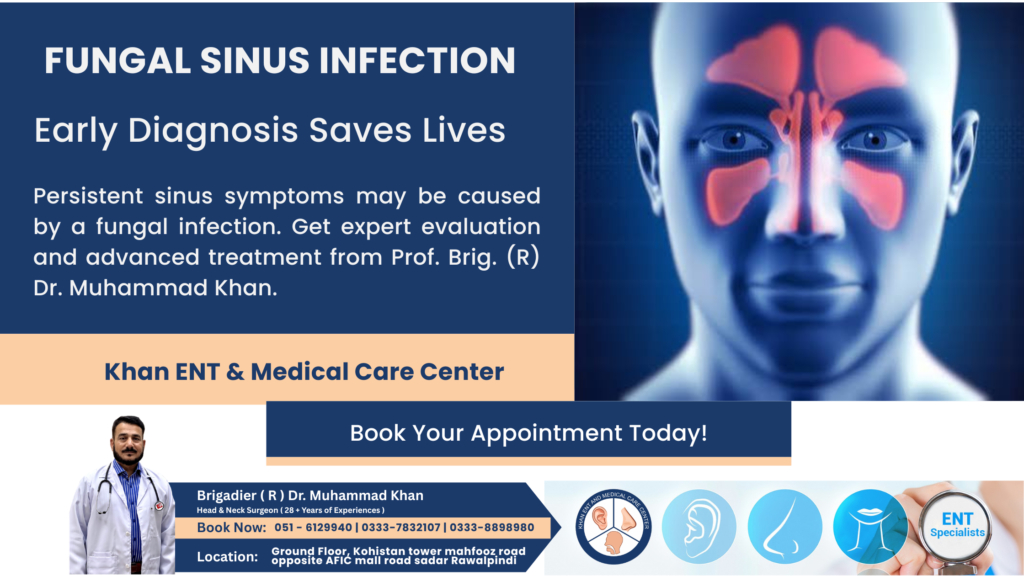
Fungal sinus infection is a type of sinus disease caused by fungi such as molds and yeasts that invade or grow inside the nasal passages and sinuses. Although it is less common than viral or bacterial sinusitis, it can range from a mild condition to a life-threatening medical emergency, particularly in people with weakened immune systems. Early diagnosis and prompt treatment by an experienced ENT specialist are essential to prevent serious complications.
If you have persistent nasal blockage, facial pain, thick nasal discharge, loss of smell, or repeated sinus infections, it is important to consult an ENT specialist to determine whether a infection is the underlying cause.
What Is a Fungal Sinus Infection?
It (also known as fungal rhinosinusitis) occurs when fungi grow inside the sinuses. Unlike bacterial sinus infections, fungal infections often require specialized treatment and, in many cases, endoscopic sinus surgery.
Fungi are naturally present in the environment and are inhaled daily. Most healthy individuals never develop disease because their immune system prevents fungal growth. However, in certain people, fungi can colonize or invade the sinus cavities, leading to inflammation, blockage, and infection.
It may affect one or multiple sinuses, including:
- Maxillary sinuses
- Ethmoid sinuses
- Frontal sinuses
- Sphenoid sinuses
Some forms remain confined to the sinuses, while invasive can spread rapidly to the eyes, facial bones, and brain.
Types of Fungal Sinus Infection
ENT specialists classify fungal sinus infection into two major categories.
Non-Invasive
This is the most common type and usually occurs in people with a healthy immune system.
Allergic Fungal Rhinosinusitis (AFRS)
This develops due to an allergic reaction to fungal organisms rather than direct tissue invasion.
Common features include:
- Chronic nasal blockage
- Nasal polyps
- Thick sticky mucus
- Recurrent sinus infections
- Asthma
- Allergic rhinitis
Fungal Ball (Mycetoma)
A fungal ball is a dense collection of fungal material, most commonly found in the maxillary sinus.
Patients may experience:
- Facial pain
- Bad smell from the nose
- Headache
- One-sided nasal blockage
Saprophytic Fungal Infection
This is the mildest form where fungi grow on dried mucus or crusts inside the nose without invading tissue.
Invasive
This is a medical emergency because fungi invade blood vessels, nerves, and surrounding tissues.
Types include:
Acute Invasive
This aggressive disease progresses within days and mostly affects people with:
- Uncontrolled diabetes
- Cancer
- Leukemia
- Organ transplantation
- HIV/AIDS
- Chemotherapy
- Long-term steroid use
Without urgent treatment, it may cause blindness or death.
Chronic Invasive
This develops slowly over weeks or months but still damages surrounding tissues.
Granulomatous Invasive
This rare condition is more frequently reported in South Asia, including Pakistan, India, and Sudan. It causes chronic inflammation and tissue destruction.
Causes of Fungal Sinus Infection
It develops when fungal spores enter the nose and multiply within blocked or unhealthy sinuses.
Common fungi include:
- Aspergillus species
- Mucor
- Rhizopus
- Curvularia
- Bipolaris
Several factors increase the likelihood of developing it.
Risk Factors
- Diabetes mellitus
- Weak immune system
- Chemotherapy
- HIV infection
- Organ transplant
- Long-term steroid therapy
- Leukemia
- Lymphoma
- Chronic sinus disease
- Nasal polyps
- Allergic rhinitis
- Asthma
- Previous sinus surgery
- Environmental mold exposure
Symptoms of Fungal Sinus Infection
Symptoms vary depending on the type of it.
Common Symptoms
- Persistent nasal blockage
- Facial pressure
- Facial pain
- Thick yellow or green mucus
- Dark-colored mucus
- Reduced sense of smell
- Headache
- Postnasal drip
- Nasal congestion
- Bad breath
- Fever
- Fatigue
- Tooth pain
- Cough
Warning Signs of Severe Fungal Sinus Infection
Seek emergency medical attention if you develop:
- Swelling around the eyes
- Double vision
- Vision loss
- Black discoloration inside the nose
- Facial numbness
- Severe headache
- Confusion
- Difficulty speaking
- Eye movement problems
- Altered consciousness
How Is Fungal Sinus Infection Diagnosed?
Diagnosing it requires careful evaluation by an experienced ENT specialist.
Your doctor may perform:
Medical History
Your ENT specialist will ask about:
- Duration of symptoms
- Previous sinus infections
- Diabetes
- Immune disorders
- Medications
- Allergy history
Nasal Endoscopy
A thin flexible camera is inserted into the nose to examine:
- Nasal polyps
- Thick fungal debri
- Swelling
- Blockages
- Tissue damage
CT Scan of the Sinuses
CT imaging helps identify:
- Sinus blockage
- Bone destruction
- Fungal balls
- Thick mucus
- Extent of disease
MRI Scan
MRI is recommended when infection may involve:
- Eyes
- Brain
- Blood vessels
Biopsy
A tissue sample confirms the diagnosis and identifies the exact fungal organism.
This is considered the gold standard for diagnosing invasive it.
Laboratory Tests
Your doctor may request:
- Blood sugar
- Complete blood count
- Immune function tests
- Fungal culture
- Histopathology
Treatment of Fungal Sinus Infection
Treatment depends on the severity and type of fungal sinus infection.
Endoscopic Sinus Surgery
Modern Functional Endoscopic Sinus Surgery (FESS) is the primary treatment for most fungal sinus infections.
The procedure helps:
- Remove fungal debris
- Open blocked sinuses
- Improve drainage
- Remove nasal polyps
- Restore breathing
Antifungal Medications
Invasive can often requires intravenous antifungal drugs.
Corticosteroids
Patients with allergic may benefit from corticosteroids to reduce inflammation and decrease recurrence.
Steroids should always be used under medical supervision.
Saline Nasal Irrigation
Regular saline washes help:
- Remove mucus
- Clear allergens
- Reduce crusting
- Improve healing after surgery
Treating Underlying Conditions
Successful management also requires controlling:
- Diabetes
- Allergies
- Asthma
- Immune disorders
Complications of Fungal Sinus Infection
Untreated can lead to serious complications.
Possible complications include:
- Chronic sinusitis
- Bone erosion
- Eye infection
- Blindness
- Brain abscess
- Meningitis
- Cavernous sinus thrombosis
- Facial deformity
- Permanent nerve damage
- Death (in invasive disease)
Early diagnosis significantly improves outcomes.
Recovery After Treatment
Recovery depends on the type of fungal sinus infection.
Most patients with non-invasive disease recover completely after surgery and medical treatment.
Patients with invasive issue require:
- Hospital admission
- Intravenous medications
- Multiple follow-up visits
- Repeat endoscopic examinations
Regular ENT follow-up reduces the risk of recurrence.
Can Fungal Sinus Infection Be Prevented?
Although not all cases are preventable, the following measures reduce the risk.
- Control diabetes effectively.
- Avoid unnecessary steroid use.
- Treat allergies promptly.
- Use saline nasal rinses when advised.
- Avoid prolonged exposure to mold.
- Maintain good nasal hygiene.
- Seek treatment for chronic sinus problems.
- Strengthen your immune system with a healthy lifestyle.
When Should You See an ENT Specialist?
Schedule an ENT consultation if you have:
- Sinus symptoms lasting more than 10 days
- Recurrent sinus infections
- Thick nasal discharge
- Loss of smell
- Persistent facial pain
- Nasal polyps
- Blood-stained nasal discharge
- One-sided nasal blockage
Seek emergency care immediately if you develop vision changes, facial swelling, black nasal tissue, or severe neurological symptoms.
Why Choose Prof. Brig. (R) Dr. Muhammad Khan for Treatment?
For patients in Rawalpindi and Islamabad, choosing an experienced ENT surgeon is essential for the successful diagnosis and treatment of it.
Prof. Brig. (R) Dr. Muhammad Khan is one of the region’s highly experienced ENT specialists, offering comprehensive care for simple and complex sinus diseases. Patients trust him because of his extensive clinical expertise, accurate diagnosis, patient-focused care, and advanced endoscopic surgical skills.
Residents of Rawalpindi and Islamabad prefer Prof. Brig. (R) Dr. Muhammad Khan because he provides:
- Comprehensive evaluation using modern diagnostic techniques
- Expert nasal endoscopy for accurate diagnosis
- Advanced Functional Endoscopic Sinus Surgery (FESS)
- Personalized treatment plans
- Management of recurrent and difficult sinus infections
- Care for allergic fungal sinusitis and invasive fungal sinus infections
- Long-term follow-up to reduce recurrence
- Compassionate, evidence-based ENT care.
Frequently Asked Questions (FAQs)
What causes it ?
It develops when fungal spores grow inside the sinuses, particularly in people with allergies, chronic sinus disease, diabetes, or weakened immunity.
Is a fungal sinus infection contagious?
No. It does not spread from person to person.
Can antibiotics treat a fungal sinus infection?
No. Antibiotics do not kill fungi. Most fungal sinus infections require specialized ENT treatment, and some require surgery and antifungal medications.
Is fungal sinus infection dangerous?
Non-invasive fungal sinus infection is usually treatable, but invasive fungal sinus infection is a medical emergency that can become life-threatening if not treated promptly.
How is fungal sinus infection diagnosed?
Diagnosis usually involves nasal endoscopy, CT scan, biopsy, fungal culture, and laboratory investigations.
Does every fungal sinus infection need surgery?
No. Mild saprophytic infections may respond to saline cleansing, but fungal balls and many other forms often require endoscopic sinus surgery.
Can fungal sinus infection come back after treatment?
Yes. Allergic fungal sinus infection has a higher recurrence rate, making regular follow-up with an ENT specialist important.
Who is at highest risk of developing fungal sinus infection?
People with uncontrolled diabetes, cancer, HIV, organ transplants, chemotherapy, prolonged steroid use, or weakened immune systems have the highest risk.
How long does recovery take after fungal sinus infection treatment?
Recovery varies depending on the severity of the disease. Most patients recover within a few weeks after surgery, while invasive infections require longer treatment and close monitoring.
When should I seek emergency care for fungal sinus infection?
Seek immediate medical attention if you experience facial swelling, vision changes, black tissue inside the nose, severe headache, confusion, or symptoms that rapidly worsen, especially if you have diabetes or a weakened immune system.
A fungal sinus infection should never be ignored, especially in individuals with diabetes or weakened immunity. Early diagnosis, appropriate imaging, nasal endoscopy, and timely treatment can prevent severe complications and improve long-term outcomes. If you are experiencing persistent sinus symptoms, consult an experienced ENT specialist without delay. For expert diagnosis and advanced management of fungal sinus infection in Rawalpindi and Islamabad, Prof. Brig. (R) Dr. Muhammad Khan offers comprehensive, evidence-based care using modern diagnostic and surgical techniques.