
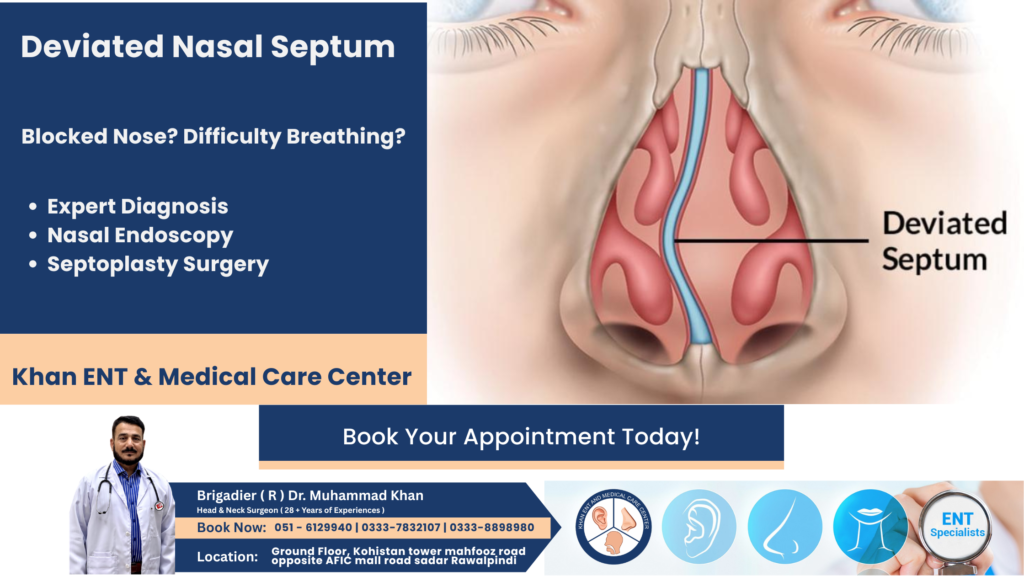
Deviated Nasal Septum (DNS)
Deviated Nasal Septum (DNS) is one of the most common nasal conditions affecting people of all ages. A DNS occurs when the wall (nasal septum) that separates the right and left nasal passages is displaced or bent to one side. While many individuals have a slightly crooked septum without symptoms, a severe issue can significantly affect breathing, sleep, sinus drainage, and overall quality of life.
If you experience persistent nasal blockage, difficulty breathing through one side of your nose, frequent sinus infections, headaches, snoring, or nosebleeds, you may have a Deviated Nasal Septum (DNS). Early diagnosis by an experienced ENT specialist can help prevent complications and improve your breathing permanently.
At Khan ENT & Medical Care Center, Prof. Brig. (R) Dr. Muhammad Khan, one of the leading ENT & Head Neck Surgeons in Rawalpindi, provides expert diagnosis and advanced Septoplasty surgery for patients suffering from DNS.
What is a Deviated Nasal Septum (DNS)?
The nasal septum is the thin wall made of cartilage and bone that divides the nose into two equal air passages.
-
- The septum shifts away from the center.
- One nasal passage becomes narrower.
- Airflow is reduced.
- Nasal drainage becomes impaired.
- Breathing becomes difficult.
Why Does a Deviated Nasal Septum (DNS) Occur?
Several factors can cause a DNS.
- Congenital DNS
Some individuals are born with a crooked nasal septum that develops during fetal growth.
-
- Birth Trauma
Pressure during difficult childbirth may cause displacement of the nasal septum.
-
- Nasal Injury
The most common acquired cause includes:
-
- Sports injuries
- Road traffic accidents
- Falls
- Physical trauma
- Nasal fractures
-
- Age-Related Changes
As the nose continues growing, the septum may gradually become more deviated over time.
Symptoms of Deviated Nasal Septum (DNS)
Symptoms vary depending on the severity.
Common symptoms include:
-
- Persistent nasal blockage
- Difficulty breathing through one nostril
- One-sided nasal congestion
- Frequent sinus infections
- Snoring
- Mouth breathing
- Dry mouth
- Frequent nosebleeds
- Headaches
- Facial pressure
- Postnasal drip
- Reduced sense of smell
- Poor sleep quality
- Noisy breathing
- Sleep apnea in severe cases
- Many patients notice that one side of the nose always feels blocked, regardless of allergy or cold.
Signs That You May Have Deviated Nasal Septum (DNS)
You should consult an ENT specialist if you experience:
-
- Constant blockage on one side
- Difficulty exercising due to poor breathing
- Recurrent sinus infections
- Persistent snoring
- Frequent nosebleeds
- Mouth breathing during sleep
- Facial pain
- Chronic headaches
- Poor sleep
- Unequal nostrils
- How Does Deviated Nasal Septum Affect Breathing?
Normally, air passes equally through both nasal passages.
-
- Airflow becomes turbulent.
- One side receives less oxygen.
- The nose becomes congested.
- Nasal tissues swell easily.
- Sinus drainage becomes blocked.
- Over time, this can lead to repeated infections and chronic inflammation.
Complications of Untreated Deviated Nasal Septum (DNS)
Ignoring Deviated Nasal Septum (DNS) can result in:
-
- Chronic sinusitis
- Recurrent sinus infections
- Sleep apnea
- Persistent nasal obstruction
- Frequent nosebleeds
- Poor sleep
- Daytime fatigue
- Mouth breathing
- Dry throat
- Ear infections (especially in children)
- Reduced quality of life
- Risk Factors
You are more likely to develop Deviated Nasal Septum (DNS) if you:
-
- Play contact sports
- Have suffered a broken nose
- Experienced facial trauma
- Were born with nasal deformity
- Have repeated nasal injuries
How is Deviated Nasal Septum (DNS) Diagnosed?
An experienced ENT specialist performs a detailed examination.
Diagnosis may include:
Medical History
Your doctor asks about:
-
- Nasal blockage
- Sinus infections
- Snoring
- Sleep quality
- Nosebleeds
Physical Examination
Special instruments help visualize the nasal passages.
Nasal Endoscopy
A flexible camera examines:
-
- Septal deviation
- Polyps
- Turbinate enlargement
- Infection
- CT Scan
Recommended when sinus disease is suspected.
Can Deviated Nasal Septum (DNS) Be Treated Without Surgery?
Yes—but only symptoms can be managed.
Medications may include:
-
- Nasal steroid sprays
- Antihistamines
- Saline nasal irrigation
- Decongestants (short-term use only)
- Pain relievers
These medicines reduce swelling but cannot straighten the septum.
Septoplasty – The Permanent Treatment for Deviated Nasal Septum (DNS)
Septoplasty is the gold-standard surgical treatment.
During surgery:
-
- The surgeon repositions the deviated septum.
- Extra cartilage or bone is reshaped.
- Air passages become equal.
- Nasal breathing improves permanently.
Septoplasty is considered one of the most successful ENT procedures.
Benefits of Septoplasty
Patients often experience:
-
- Better breathing
- Improved sleep
- Fewer sinus infections
- Reduced snoring
- Better exercise tolerance
- Less nasal congestion
- Improved quality of life
- Fewer headaches
- Better sense of smell
- Recovery After Septoplasty
Recovery is generally quick.
Most patients:
-
- Return home the same day
- Resume office work within one week
- Experience full healing within several weeks
- During recovery:
-
- Avoid nose blowing.
- Avoid heavy exercise.
- Sleep with your head elevated.
- Attend follow-up appointments.
Can Deviated Nasal Septum (DNS) Cause Snoring?
Yes.
A blocked nose forces breathing through the mouth.
This increases:
-
- Snoring
- Sleep disturbance
- Poor oxygen intake
Correcting the septum often significantly improves snoring.
Can Deviated Nasal Septum Cause Sinus Infections?
Absolutely.
When mucus cannot drain properly because of the crooked septum:
-
- Bacteria grow more easily.
- Sinuses become inflamed.
- Recurrent infections occur.
- Treating the underlying DNS often prevents repeated sinus infections.
Can Allergies Cause Deviated Nasal Septum?
No.
Allergies do not cause Deviated Nasal Septum (DNS).
However, allergies can worsen symptoms by increasing nasal swelling.
Prevention
Although congenital cases cannot be prevented, you can reduce your risk by:
-
- Wearing helmets during sports
- Using seat belts
- Treating nasal injuries promptly
- Seeking ENT evaluation after nasal fractures
When Should You See an ENT Specialist?
Consult an ENT specialist immediately if you have:
-
- Chronic blocked nose
- Difficulty breathing
- Repeated sinus infections
- Persistent snoring
- Frequent nosebleeds
- Sleep problems
- Facial pain
- Mouth breathing
- One-sided nasal blockage
- Previous nasal injury
- Early diagnosis prevents long-term complications.
Expert Care by Prof. Brig. (R) Dr. Muhammad Khan
If you are suffering from Deviated Nasal Septum (DNS), expert evaluation is essential for accurate diagnosis and long-term relief.
Prof. Brig. (R) Dr. Muhammad Khan is a highly experienced ENT & Head Neck Surgeon with decades of expertise in diagnosing and treating nasal, sinus, ear, throat, and head & neck conditions. At Khan ENT & Medical Care Center, located in Kohistan Tower, Saddar, Rawalpindi, patients receive comprehensive care using modern diagnostic techniques, including nasal endoscopy and advanced surgical management.
Dr. Muhammad Khan specializes in Septoplasty, functional nasal surgery, sinus disease management, allergic rhinitis treatment, and complex ENT procedures. His patient-centered approach, extensive military and civilian medical experience, and commitment to evidence-based treatment have made him one of the trusted ENT specialists in Rawalpindi and Islamabad.
If persistent nasal blockage, snoring, or recurrent sinus infections are affecting your daily life, book a consultation at Khan ENT & Medical Care Center for expert assessment and personalized treatment.
Why Choose Khan ENT & Medical Care Center?
Patients choose our clinic because of:
-
- Experienced ENT & Head Neck Surgeon
- Modern ENT equipment
- Nasal Endoscopy Facility
- Advanced Septoplasty Surgery
- Personalized treatment plans
- Affordable consultation
- Convenient location in Saddar Rawalpindi
- Comprehensive care for adults and children
- Evidence-based medical and surgical treatment
- Excellent patient satisfaction
Frequently Asked Questions (FAQs)
1. What is a Deviated Nasal Septum (DNS)?
It is a condition in which the nasal septum is displaced from the center, making one nasal passage narrower than the other.
2. Can a Deviated Nasal Septum (DNS) cause breathing problems?
Yes. A severe deviation can block airflow and make breathing difficult, especially through one nostril
3. Does a Deviated Nasal Septum (DNS) cause snoring?
Yes. Nasal obstruction from a deviated septum can contribute to snoring and poor-quality sleep
4. Can medications cure a Deviated Nasal Septum (DNS)?
No. Medicines relieve symptoms such as swelling and congestion but cannot straighten the septum.
5. What is Septoplasty?
Septoplasty is a surgical procedure that corrects a deviated nasal septum to improve airflow and breathing.
6. Is Septoplasty a painful surgery?
Septoplasty is generally well tolerated. Mild discomfort after surgery is common and can be managed with prescribed medication
7. How long does recovery take after Septoplasty?
Most patients return to normal activities within one week, while complete healing may take several weeks.
8. Can a Deviated Nasal Septum (DNS) cause sinus infections?
Yes. Poor sinus drainage due to a deviated septum can lead to recurrent sinus infections.
9. When should I see an ENT specialist for a Deviated Nasal Septum (DNS)?
If you have persistent nasal blockage, repeated sinus infections, frequent nosebleeds, snoring, or breathing difficulty, consult an ENT specialist
10. Where can I get treatment for Deviated Nasal Septum (DNS) in Rawalpindi?
You can consult Prof. Brig. (R) Dr. Muhammad Khan at Khan ENT & Medical Care Center, Kohistan Tower, Saddar, Rawalpindi, for expert diagnosis, nasal endoscopy, and advanced Septoplasty surgery.