
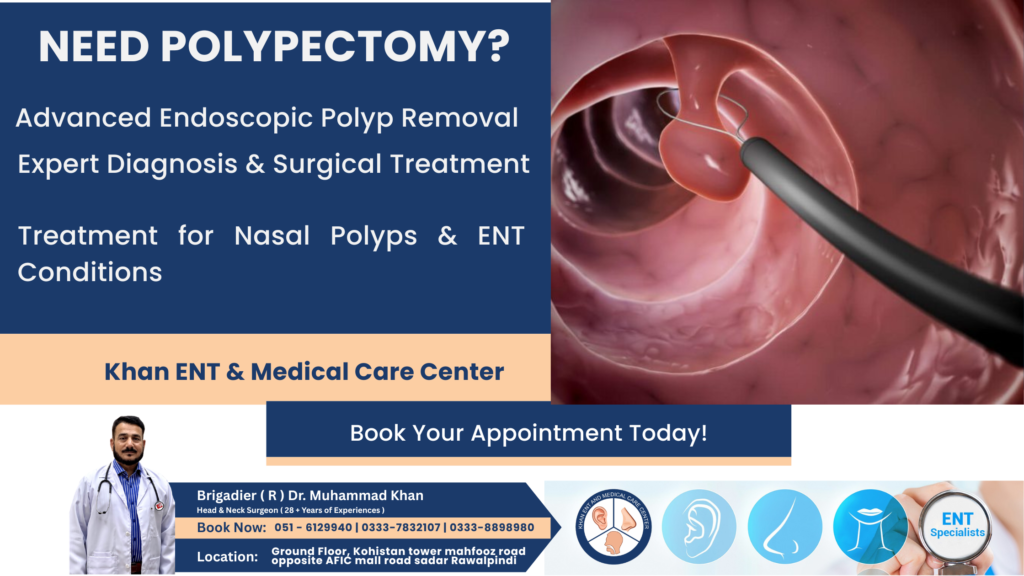
Polypectomy is a safe and effective minimally invasive procedure used to remove abnormal tissue growths called polyps from different parts of the body. It may be recommended when a polyp causes symptoms, appears suspicious for cancer, or has the potential to become cancerous in the future. Removing a polyp allows doctors to examine it under a microscope and helps prevent serious diseases, including cancer. Whether the polyp is found in the nose, colon, stomach, uterus, vocal cords, or other organs, polypectomy remains one of the most important procedures for both diagnosis and treatment.
If you are looking for expert evaluation and treatment in Rawalpindi or Islamabad, Prof. Brig. (R) Dr. Muhammad Khan, Senior ENT & Head & Neck Surgeon at Khan ENT & Medical Care Center, Rawalpindi, offers comprehensive diagnosis and surgical management of nasal polyps and other ENT conditions using modern techniques with a strong focus on patient safety and excellent outcomes.
What Is Polypectomy?
It is a surgical procedure performed to remove a polyp, which is an abnormal growth arising from the lining (mucosa) of an organ.
Polyps may develop in different parts of the body including:
- Nose
- Colon (large intestine)
- Stomach
- Uterus
- Cervix
- Vocal cords
- Small intestine
- Gallbladder
Most polyps are benign (non-cancerous), but some may become precancerous or cancerous over time. Because doctors cannot always determine whether a polyp is dangerous simply by looking at it, removing it through a polypectomy is often the best option.
Why Is a Polypectomy Performed?
Your healthcare provider may recommend a polypectomy for several important reasons:
- To remove suspicious growths
- To prevent cancer development
- To relieve symptoms caused by the polyp
- To stop bleeding
- To improve breathing or swallowing
- To restore normal organ function
- To obtain tissue for laboratory examination (biopsy)
Many specialists recommend removing polyps even when they appear harmless because they may enlarge or undergo cancerous changes over time.
What Are Polyps?
Polyps are soft tissue growths that project from the lining of an organ into its hollow cavity.
They vary in:
- Shape
- Size
- Number
- Location
- Risk of becoming cancerous
Some polyps remain tiny for years, while others grow rapidly.
Polyps can be:
- Benign
- Precancerous
- Cancerous
Types of Polypectomy
There are different types of it but one of the major is Nasal polyps.
Nasal Polypectomy
Nasal polyps develop inside the nasal cavity or sinuses.
A nasal polypectomy is commonly performed for patients suffering from:
- Chronic sinusitis
- Nasal blockage
- Loss of smell
- Snoring
- Mouth breathing
- Recurrent sinus infections
Modern nasal polypectomy is usually performed using endoscopic sinus surgery (FESS) with excellent precision.
Nasal Polypectomy – A Special Focus
Since ENT specialists frequently perform nasal polypectomy, understanding this procedure is especially important.
Nasal polyps are painless, soft growths that develop due to chronic inflammation.
Symptoms include:
- Persistent blocked nose
- Reduced sense of smell
- Runny nose
- Facial pressure
- Postnasal drip
- Frequent sinus infections
- Snoring
- Poor sleep
When medications fail, nasal polypectomy becomes the preferred treatment.
Who Needs a Polypectomy?
A doctor may recommend polypectomy if you have:
- Large polyps
- Rapidly growing polyps
- Recurrent bleeding
- Persistent pain
- Nasal obstruction
- Chronic sinus disease
How Is a Polypectomy Performed?
The exact procedure depends on the location of the polyp.
Generally, the process involves:
Step 1: Anesthesia
Patients receive:
- Local anesthesia
- Sedation
- General anesthesia (if necessary)
Step 2: Endoscope Insertion
A flexible or rigid endoscope is inserted into the affected organ.
The camera provides a magnified view of the polyp.
Step 3: Polyp Removal
Special instruments remove the polyp safely.
Common techniques include:
- Cold snare polypectomy
- Hot snare polypectomy
- Forceps removal
- Electrocautery
- Endoscopic mucosal resection (EMR)
- Endoscopic submucosal dissection (ESD)
Step 4: Bleeding Control
The surgeon seals blood vessels using:
- Electrocautery
- Clips
- Cauterization
Step 5: Laboratory Examination
Every removed polyp should be sent for histopathological examination to rule out cancer.
Is Polypectomy Painful?
Most patients experience little or no pain during a polypectomy because anesthesia is used.
After surgery, mild discomfort may occur depending on the treatment site.
Most symptoms improve within a few days.
Benefits of Polypectomy
A polypectomy offers several important benefits.
These include:
- Prevents cancer
- Relieves symptoms
- Improves breathing
- Enhances quality of life
- Provides a definitive diagnosis
- Reduces future complications
Risks of Polypectomy
Although polypectomy is considered very safe, complications may occasionally occur.
Possible risks include:
- Bleeding
- Infection
- Pain
- Swelling
Serious complications are uncommon when the procedure is performed by an experienced surgeon.
Recovery After Polypectomy
Recovery varies according to the surgical site.
Most patients recover quickly.
General recovery tips include:
- Rest for 24–48 hours
- Take prescribed medications
- Drink adequate fluids
- Avoid strenuous activities
- Attend follow-up appointments
- Follow dietary advice if gastrointestinal polyps were removed
Patients undergoing nasal polypectomy should avoid nose blowing, heavy lifting, and dusty environments until healing is complete.
Can Polyps Return After Polypectomy?
Yes.
Some polyps, especially nasal polyps, may recur because of ongoing inflammation.
Doctors may recommend:
- Steroid nasal sprays
- Allergy treatment
- Regular follow-up examinations
- Lifestyle modifications
Early treatment reduces recurrence.
Polypectomy vs Polyp Biopsy
Many patients ask whether a biopsy is enough.
A biopsy removes only a small tissue sample.
A polypectomy removes the entire polyp.
Complete removal provides:
- Better diagnosis
- Lower recurrence
- Cancer prevention
- Symptom relief
When Should You See an ENT Specialist?
Consult an ENT specialist if you experience:
- Persistent nasal blockage
- Loss of smell
- Recurrent sinus infections
- Frequent nosebleeds
- Snoring
- Mouth breathing
Early evaluation can prevent long-term complications.
Why Choose Prof. Brig. (R) Dr. Muhammad Khan for Nasal Polypectomy in Rawalpindi?
Residents of Rawalpindi and Islamabad seeking expert care for nasal polyps and other ENT conditions can confidently consult Prof. Brig. (R) Dr. Muhammad Khan, one of the region’s most experienced ENT & Head and Neck Surgeons.
Why patients trust Prof. Brig. (R) Dr. Muhammad Khan:
- More than 30 years of ENT surgical experience
- Retired Brigadier and senior military ENT consultant
- Former Professor of ENT
- Expertise in advanced endoscopic sinus surgery (FESS)
- Specialized treatment for nasal polyps, chronic sinusitis, and nasal obstruction
- Comprehensive diagnosis using modern ENT equipment
- Evidence-based treatment plans
- Ethical, patient-centered care
- High standards of surgical safety
- Personalized follow-up after surgery
At Khan ENT & Medical Care Center, Rawalpindi, patients receive comprehensive ENT care ranging from diagnosis to advanced surgical treatment. Individuals from Rawalpindi, Islamabad, Wah Cantt, Taxila, Gujar Khan, Chakwal, Attock, Murree, and surrounding areas choose Prof. Brig. (R) Dr. Muhammad Khan for his extensive expertise, precise surgical skills, and commitment to excellent patient outcomes.
For patients experiencing persistent nasal blockage, chronic sinus infections, or suspected nasal polyps, early consultation can help prevent complications and significantly improve breathing and quality of life.
Tips to Reduce the Risk of Polyp Recurrence
Although not all polyps can be prevented, you can reduce your risk by:
- Treating allergies promptly
- Managing chronic sinus infections
- Avoiding smoking
- Maintaining good nasal hygiene
- Using prescribed medications regularly
- Attending scheduled follow-up visits
- Eating a healthy diet
- Exercising regularly
Frequently Asked Questions (FAQs)
What is a polypectomy?
A polypectomy is a minimally invasive surgical procedure used to remove abnormal tissue growths called polyps from organs such as the nose, colon, stomach, uterus, or vocal cords.
Is a polypectomy painful?
No. Most polypectomy procedures are performed under local anesthesia, sedation, or general anesthesia, so patients usually feel little or no pain.
How long does a polypectomy take?
Most procedures take between 20 and 60 minutes, depending on the size, number, and location of the polyps.
How long is recovery after a polypectomy?
Most patients recover within a few days. Recovery may be slightly longer after extensive surgery or large polyp removal.
Can polyps come back after a polypectomy?
Yes. Some polyps, particularly nasal polyps, may recur, making regular follow-up important.
Is a polypectomy considered surgery?
Yes. Although it is usually minimally invasive, a polypectomy is a surgical procedure.
Why is every removed polyp sent to a laboratory?
Laboratory analysis determines whether the polyp is benign, precancerous, or cancerous and guides further treatment if needed.
What are the risks of a polypectomy?
Possible risks include bleeding, infection, perforation, anesthesia-related complications, and recurrence, although serious complications are uncommon.
When should I consider nasal polypectomy?
Nasal polypectomy may be recommended if medications fail to relieve persistent nasal blockage, recurrent sinus infections, reduced sense of smell, or breathing difficulties caused by nasal polyps.
Where can I get expert nasal polypectomy treatment in Rawalpindi?
Patients in Rawalpindi and Islamabad can consult Prof. Brig. (R) Dr. Muhammad Khan at Khan ENT & Medical Care Center for expert diagnosis and advanced surgical treatment of nasal polyps and other ENT conditions.