
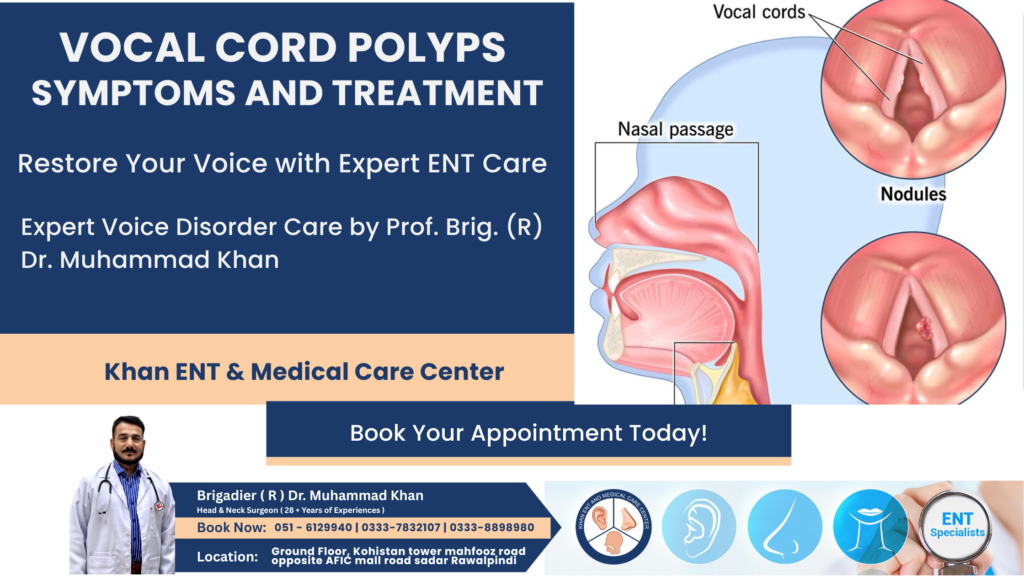
Vocal Cord Polyps Symptoms and Treatment
Vocal Cord Polyps Symptoms and Treatment is one of the most searched topics by people experiencing persistent hoarseness, voice changes, or throat discomfort. Vocal cord polyps are benign (non-cancerous) growths that develop on one or both vocal cords due to repeated voice strain, vocal abuse, smoking, acid reflux, or other irritants. Although they are not cancerous, untreated vocal cord polyps can significantly affect your speech, singing ability, professional performance, and overall quality of life.
Early diagnosis and proper treatment can restore your voice and prevent permanent damage to your vocal cords. At Khan ENT & Medical Care Center Rawalpindi Prof. Brig. (R) Dr. Muhammad Khan, one of the leading ENT and Head & Neck Surgeons in Rawalpindi, provides comprehensive evaluation and advanced treatment for vocal cord polyps using modern diagnostic and surgical techniques.
What Are Vocal Cord Polyps?
Vocal cord polyps are soft, non-cancerous swellings that develop on the surface of the vocal cords (vocal folds). They interfere with the normal vibration of the vocal cords, resulting in hoarseness and changes in voice quality.
Unlike vocal cord nodules, which usually occur on both vocal cords and resemble calluses, polyps are generally:
- Larger than nodules
- Usually found on one vocal cord
- May contain fluid or blood
- Can be broad-based (sessile) or attached by a stalk (pedunculated)
Most vocal cord polyps develop after prolonged voice misuse, but some appear suddenly after a single episode of severe vocal strain, such as excessive shouting.
Vocal Cord Polyps Symptoms and Treatment: Common Symptoms
Recognizing Vocal Cord Polyps Symptoms and Treatment early is essential for preserving your voice.
Common symptoms include:
- Persistent hoarseness lasting more than two weeks
- Raspy or rough voice
- Breathy voice
- Voice fatigue after speaking
- Difficulty projecting your voice
- Frequent throat clearing
- Feeling of something stuck in the throat
- Reduced vocal range while singing
- Voice breaks during speech
- Neck discomfort while talking
- Pain radiating from one ear to the other
- Weak voice
- Difficulty speaking for long periods
Professional voice users—including teachers, singers, lawyers, salespersons, call center workers, public speakers, and religious speakers—are at particularly high risk.
What Causes Vocal Cord Polyps?
Several factors contribute to the development of vocal cord polyps.
Voice Overuse
The most common cause is repeated vocal trauma, including:
- Excessive talking
- Loud speaking
- Yelling
- Singing improperly
- Speaking continuously without rest
Smoking
Smoking causes chronic irritation and inflammation of the vocal cords. Smokers are at significantly higher risk of developing:
- Vocal cord polyps
- Reinke’s edema
- Chronic laryngitis
- Voice disorders
- Laryngeal cancer
Acid Reflux (GERD)
Stomach acid reaching the throat repeatedly irritates the vocal cords, delaying healing and increasing the risk of polyp formation.
Allergies
Chronic allergies often lead to:
- Frequent throat clearing
- Persistent coughing
- Voice strain
These habits repeatedly traumatize the vocal cords.
Upper Respiratory Infections
Using your voice excessively while suffering from:
- Flu
- Cold
- Laryngitis
- Viral infections
can damage already inflamed vocal cords.
Excessive Alcohol and Caffeine
These beverages dry the vocal cords, making them more susceptible to injury.
Who Is Most at Risk?
People at highest risk include:
- Teachers
- Professors
- Singers
- Imams
- Motivational speakers
- Lawyers
- Politicians
- Call center employees
- Coaches
- Sales representatives
- Smokers
- Patients with acid reflux
How Are Vocal Cord Polyps Diagnosed?
Accurate diagnosis is essential because persistent hoarseness can also indicate more serious conditions.
An ENT specialist may perform:
Medical History
Your doctor will ask about:
- Duration of symptoms
- Occupation
- Smoking history
- Voice use
- Acid reflux
- Previous voice problems
Flexible Fiberoptic Laryngoscopy
A thin camera is passed through the nose to examine:
- Vocal cords
- Voice box
- Throat
This painless procedure provides a clear view of the lesion.
Video Laryngostroboscopy
This advanced investigation evaluates:
- Vocal cord vibration
- Mucosal wave
- Movement abnormalities
- Size and location of the polyp
It is considered the gold standard for evaluating persistent hoarseness.
Vocal Cord Polyps Symptoms and Treatment Options
Treatment depends on:
- Size of the polyp
- Duration of symptoms
- Occupation
- Voice demands
- Smoking status
- Presence of reflux
Voice Therapy
Many small polyps improve with professional voice therapy.
Speech-language therapists teach patients:
- Proper voice production
- Vocal hygiene
- Breathing techniques
- Voice conservation
- Correct speaking habits
Voice therapy also helps prevent recurrence after surgery.
Medical Treatment
Underlying conditions should be treated simultaneously.
Treatment may include:
- Anti-reflux medications
- Allergy treatment
- Treatment of sinus infections
- Hydration
- Smoking cessation
Lifestyle Changes
Patients are advised to:
- Drink plenty of water
- Avoid shouting
- Stop smoking
- Reduce caffeine
- Limit alcohol
- Use microphones during public speaking
- Rest the voice regularly
- Sleep adequately
Microlaryngeal Surgery
Large, persistent, or symptomatic polyps usually require surgery.
Modern microlaryngeal surgery offers:
- Precise removal
- Minimal tissue damage
- Faster recovery
- Better voice outcomes
After surgery, patients often require voice therapy to prevent recurrence.
Recovery After Vocal Cord Polyp Surgery
Recovery usually includes:
- Complete voice rest for several days
- Gradual return to speaking
- Voice therapy sessions
- Adequate hydration
- Avoiding smoking
- Managing reflux
Most patients notice significant improvement in voice quality within a few weeks.
Can Vocal Cord Polyps Become Cancer?
No.
Most vocal cord polyps are benign.
However, persistent hoarseness should never be ignored, especially in smokers. Only an ENT specialist can distinguish between benign polyps and early laryngeal cancer through proper examination.
How Can You Prevent Vocal Cord Polyps?
Preventive measures include:
- Avoid shouting
- Stay hydrated
- Quit smoking
- Limit alcohol
- Control acid reflux
- Treat allergies promptly
- Warm up your voice before prolonged speaking
- Avoid speaking loudly in noisy environments
- Use proper microphone techniques
- Rest your voice regularly
Why Choose Prof. Brig. (R) Dr. Muhammad Khan?
If you are searching for expert care for Vocal Cord Polyps Symptoms and Treatment in Rawalpindi or Islamabad, Prof. Brig. (R) Dr. Muhammad Khan is among the most trusted ENT and Head & Neck Surgeons in the region.
Patients from Rawalpindi, Islamabad, and surrounding areas prefer him because of:
- Over 30 years of ENT and Head & Neck surgical experience
- Retired Brigadier and former military ENT consultant
- Former Professor of ENT
- Expertise in voice disorders and laryngeal diseases
- Advanced endoscopic evaluation of vocal cord disorders
- Comprehensive diagnosis and individualized treatment plans
- Modern microlaryngeal surgical techniques
- Ethical, evidence-based patient care
- Comprehensive follow-up and rehabilitation
- Trusted reputation among patients across the twin cities
At Khan ENT & Medical Care Center, Rawalpindi, patients receive complete evaluation, medical management, voice assessment, and advanced surgical care under one roof.
When Should You See an ENT Specialist?
Consult an ENT specialist immediately if you experience:
- Hoarseness lasting more than two weeks
- Voice loss
- Difficulty speaking
- Persistent throat discomfort
- Voice fatigue
- Professional voice problems
- Recurrent throat clearing
- Difficulty singing
- History of smoking with persistent hoarseness
- Sudden voice changes without improvement
Early diagnosis greatly improves treatment success and helps preserve normal voice function.
Frequently Asked Questions (FAQs)
What are the first symptoms of vocal cord polyps?
Persistent hoarseness, a raspy voice, vocal fatigue, breathiness, and difficulty projecting your voice are usually the earliest symptoms.
Can vocal cord polyps heal without surgery?
Yes. Small polyps may improve with voice therapy, vocal rest, treatment of acid reflux, smoking cessation, and proper vocal hygiene.
Are vocal cord polyps cancerous?
No. Vocal cord polyps are benign growths, but persistent hoarseness should always be evaluated by an ENT specialist to rule out cancer.
What causes vocal cord polyps?
The most common causes include excessive voice use, shouting, smoking, acid reflux, allergies, chronic coughing, and improper voice techniques.
How are vocal cord polyps diagnosed?
Diagnosis involves ENT examination, flexible fiberoptic laryngoscopy, and video laryngostroboscopy to assess the vocal cords in detail.
Who is most likely to develop vocal cord polyps?
Teachers, singers, public speakers, lawyers, coaches, call center workers, smokers, and people with acid reflux are at higher risk.
How long does recovery take after vocal cord polyp surgery?
Most patients recover within a few weeks, although complete healing and voice rehabilitation may take several weeks with voice therapy.
Can vocal cord polyps come back after treatment?
Yes. Recurrence is possible if harmful voice habits, smoking, or acid reflux continue. Voice therapy and vocal hygiene reduce this risk.
Should I worry if my hoarseness lasts longer than two weeks?
Yes. Any hoarseness lasting more than two to three weeks should be evaluated by an ENT specialist to identify the underlying cause.
Where can I get expert treatment for vocal cord polyps in Rawalpindi?
Patients can receive comprehensive diagnosis and treatment from Prof. Brig. (R) Dr. Muhammad Khan at Khan ENT & Medical Care Center offering advanced care for voice disorders and vocal cord diseases.