
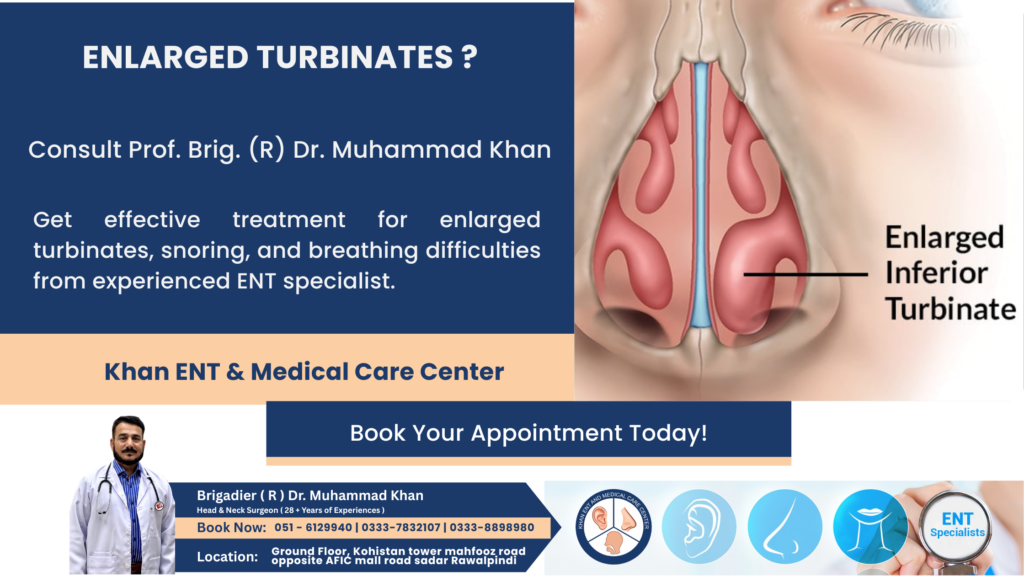
Enlarged Turbinates Treatment in Rawalpindi
Enlarged Turbinates are a common cause of chronic nasal blockage, difficulty breathing through the nose, snoring, poor sleep quality, and recurrent sinus problems. Many patients who experience long-term nasal congestion mistakenly believe they have a persistent cold, allergy, or sinus infection, when the actual cause is enlarged nasal turbinates. If left untreated, enlarged turbinates can significantly affect breathing, sleep, productivity, and overall quality of life.
For individuals seeking expert treatment for Enlarged Turbinates Treatment in Rawalpindi, early evaluation by an experienced ENT specialist can help identify the underlying cause and provide effective medical or surgical solutions. At Khan ENT Medical Care Center, patients receive comprehensive diagnosis and treatment under the supervision of Prof. Brig. (R) Dr. Muhammad Khan, a highly experienced ENT specialist serving Rawalpindi, Islamabad, and surrounding regions.
Whether your symptoms are mild or severe, understanding Enlarged Turbinates in Rawalpindi can help you make informed decisions about your health and breathing.
What Are Nasal Turbinates?
Nasal turbinates, also known as nasal conchae, are curved bony structures located inside the nasal cavity. They are covered with a soft tissue lining called mucosa, which contains numerous blood vessels.
The primary functions of the turbinates include:
- Filtering inhaled air
- Warming cold air before it reaches the lungs
- Humidifying dry air
- Regulating airflow through the nose
- Protecting the respiratory system from dust and pollutants
There are three turbinates on each side of the nose:
Inferior Turbinates
The largest and most clinically significant turbinates.
Middle Turbinates
Located above the inferior turbinates and associated with sinus drainage.
Superior Turbinates
Located near the roof of the nasal cavity.
Most cases of Enlarged Turbinates in Rawalpindi involve the inferior turbinates.
What Are Enlarged Turbinates?
Enlarged Turbinates refer to swelling or enlargement of the turbinate tissues, particularly the inferior turbinates. When these structures become enlarged, they occupy more space within the nasal cavity and obstruct airflow.
This condition is medically known as Turbinate Hypertrophy.
The enlargement may occur due to:
- Swollen mucosal tissue
- Thickened turbinate bone
- Chronic inflammation
- Allergic reactions
- Structural abnormalities
As the turbinates enlarge, patients often experience persistent nasal obstruction and breathing difficulties.
Symptoms of Enlarged Turbinates
The symptoms of Enlarged Turbinates may develop gradually and worsen over time.
Common symptoms include:
Persistent Nasal Congestion
Patients often feel as though their nose is permanently blocked.
Difficulty Breathing Through the Nose
Airflow becomes restricted in one or both nostrils.
Mouth Breathing
Many patients breathe through their mouth, especially during sleep.
Snoring
Nasal blockage frequently contributes to snoring and disturbed sleep.
Reduced Sense of Smell
Severe turbinate enlargement may affect the ability to detect odors.
Runny Nose
Excess mucus production is common in patients with turbinate hypertrophy.
Facial Pressure
Pressure around the nose, cheeks, or forehead may occur.
Dry Mouth
Mouth breathing during sleep often causes morning dryness.
Recurrent Sinus Infections
Poor airflow and mucus drainage increase the risk of sinusitis.
Frequent Nosebleeds
Inflamed nasal tissues can become fragile and bleed easily.
Causes of Enlarged Turbinates
Several factors can contribute to Enlarged Turbinates.
Allergic Rhinitis
Allergies are among the most common causes.
Triggers include:
- Dust mites
- Pollen
- Pet dander
- Mold spores
- Environmental pollutants
Chronic Sinusitis
Long-term sinus inflammation can cause persistent turbinate swelling.
Environmental Irritants
Exposure to:
- Air pollution
- Smoke
- Industrial chemicals
- Strong perfumes
can lead to chronic inflammation.
Deviated Nasal Septum
A deviated septum often coexists with enlarged turbinates.
The body may compensate by enlarging turbinates on the opposite side.
Chronic Rhinitis
Non-allergic rhinitis can also result in turbinate hypertrophy.
Hormonal Changes
Pregnancy and hormonal fluctuations can contribute to nasal swelling.
Overuse of Nasal Sprays
Prolonged use of decongestant nasal sprays may cause rebound congestion and turbinate enlargement.
Genetic Predisposition
Some individuals have a hereditary tendency toward allergic conditions and nasal inflammation.
How Enlarged Turbinates Affect Breathing
When turbinates become enlarged, the nasal passages narrow significantly.
This can lead to:
- Reduced airflow
- Increased breathing resistance
- Mouth breathing
- Poor sleep quality
- Daytime fatigue
- Reduced exercise tolerance
Many patients with Enlarged Turbinates in Rawalpindi report feeling tired because they cannot breathe comfortably while sleeping.
Diagnosis of Enlarged Turbinates
Accurate diagnosis is essential for effective treatment.
Medical History
Your ENT specialist will ask about:
- Nasal congestion
- Allergy symptoms
- Snoring
- Sleep disturbances
- Previous sinus infections
Physical Examination
The nose is examined for:
- Turbinate size
- Nasal blockage
- Septal deviation
- Nasal polyps
Nasal Endoscopy
A flexible or rigid endoscope provides a detailed view of the nasal cavity.
This procedure helps identify:
- Enlarged turbinates
- Structural abnormalities
- Sinus drainage problems
CT Scan
CT imaging may be recommended if:
- Chronic sinusitis is suspected
- Surgery is being planned
- Other nasal abnormalities are present
Allergy Testing
Testing can identify allergens responsible for chronic inflammation.
Non-Surgical Treatment for Enlarged Turbinates in Rawalpindi
Many patients improve with medical management.
Nasal Saline Irrigation
Saline rinses help:
- Remove allergens
- Reduce inflammation
- Improve mucus drainage
Antihistamines
Useful for patients with allergies.
Common benefits include:
- Reduced sneezing
- Less nasal congestion
- Improved breathing
Nasal Steroid Sprays
These medications reduce inflammation and shrink turbinate tissue over time.
Oral Decongestants
May provide temporary relief but should be used under medical supervision.
Allergy Management
Avoiding known triggers can significantly improve symptoms.
Surgical Treatment for Enlarged Turbinates in Rawalpindi
When medical therapy fails, surgery may be recommended.
The goal is to improve airflow while preserving normal turbinate function.
Radiofrequency Turbinate Reduction (RFA)
A minimally invasive procedure that uses radiofrequency energy to shrink turbinate tissue.
Benefits include:
- Minimal discomfort
- Quick recovery
- Effective airflow improvement
Submucosal Turbinate Reduction (SMR)
This procedure removes excess tissue beneath the mucosal lining while preserving the outer surface.
Benefits include:
- Long-lasting results
- Improved nasal breathing
- Reduced congestion
Turbinate Out-Fracture
The turbinate bone is gently repositioned to widen the airway.
This procedure is often combined with other techniques.
Turbinectomy
In selected cases, part of the turbinate may be surgically removed.
Conservative removal is preferred to preserve normal nasal function.
Septoplasty with Turbinate Reduction
Patients with both a deviated septum and enlarged turbinates often benefit from combined surgery.
Recovery After Turbinate Reduction Surgery
Recovery is generally straightforward.
Most patients experience:
- Mild congestion
- Temporary swelling
- Minimal discomfort
Typical recovery timeline:
- Return to work: 2–5 days
- Improved breathing: 1–3 weeks
- Complete healing: Several weeks
Following postoperative instructions is important for optimal results.
Complications of Untreated Enlarged Turbinates
Ignoring Enlarged Turbinates may lead to:
- Chronic nasal obstruction
- Persistent mouth breathing
- Recurrent sinus infections
- Poor sleep quality
- Snoring
- Fatigue
- Reduced concentration
- Sleep-disordered breathing
- Worsening allergy symptoms
Early treatment helps prevent these complications.
Why Choose Prof. Brig. (R) Dr. Muhammad Khan for Enlarged Turbinates Treatment in Rawalpindi?
Patients searching for treatment of Enlarged Turbinates Treatment in Rawalpindi need an experienced ENT specialist who understands both medical and surgical management options.
Prof. Brig. (R) Dr. Muhammad Khan is recognized for his expertise in diagnosing and treating nasal obstruction, turbinate hypertrophy, sinus disorders, allergic rhinitis, and other ENT conditions.
Reasons Patients Prefer Prof. Brig. (R) Dr. Muhammad Khan
- Extensive ENT and head & neck surgery experience
- Expertise in nasal obstruction treatment
- Advanced nasal endoscopic evaluation
- Personalized treatment plans
- Modern turbinate reduction techniques
- Evidence-based medical management
- Comprehensive follow-up care
- Convenient access for Rawalpindi and Islamabad residents
- Patient-centered approach
- Focus on long-term symptom relief
Preventing Enlarged Turbinates
You can reduce your risk by:
- Controlling allergies
- Avoiding cigarette smoke
- Limiting exposure to pollutants
- Using saline nasal irrigation
- Treating sinus infections promptly
- Avoiding overuse of decongestant nasal sprays
- Maintaining good indoor air quality
Frequently Asked Questions (FAQs)
What are enlarged turbinates?
Enlarged turbinates occur when the soft tissues or bones inside the nose become swollen, causing nasal obstruction and breathing difficulties.
What causes Enlarged Turbinates in Rawalpindi?
Common causes include allergies, chronic sinusitis, environmental pollution, deviated septum, chronic rhinitis, and prolonged nasal inflammation.
Can enlarged turbinates cause snoring?
Yes. Nasal obstruction caused by enlarged turbinates can contribute significantly to snoring and poor sleep quality.
Are enlarged turbinates dangerous?
While not usually life-threatening, untreated enlarged turbinates can affect breathing, sleep, sinus health, and quality of life.
How are enlarged turbinates diagnosed?
Diagnosis involves medical history, nasal examination, nasal endoscopy, CT scans, and sometimes allergy testing.
Can enlarged turbinates be treated without surgery?
Yes. Many patients improve with nasal steroid sprays, antihistamines, saline irrigation, and allergy management.
When is surgery needed for enlarged turbinates?
Surgery is considered when symptoms persist despite appropriate medical treatment.
Is turbinate reduction surgery painful?
Most modern turbinate reduction procedures involve minimal discomfort and relatively quick recovery.
How long does turbinate reduction surgery take?
Most procedures are completed within 20 to 60 minutes depending on the technique used.
Who is the best doctor for Enlarged Turbinates Treatment in Rawalpindi?
Prof. Brig. (R) Dr. Muhammad Khan is a trusted ENT specialist providing comprehensive diagnosis and treatment for enlarged turbinates, nasal obstruction, allergies, and sinus disorders in Rawalpindi and Islamabad.