
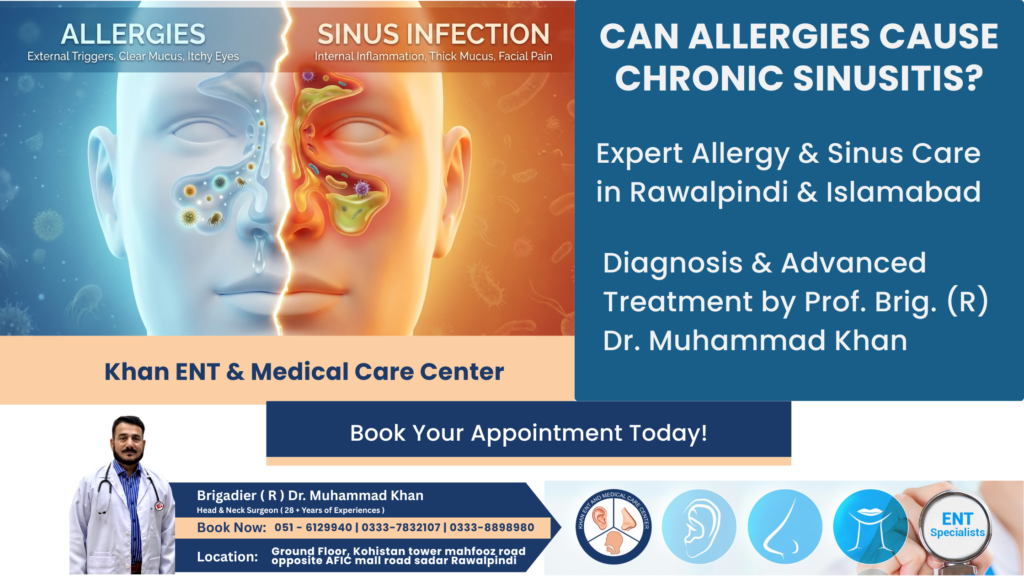
Can Allergies Cause Chronic Sinusitis?
Can Allergies Cause Chronic Sinusitis? The answer is yes, allergies can significantly contribute to chronic sinusitis, especially when allergic inflammation remains untreated for months or years. Allergic rhinitis (hay fever) causes swelling inside the nose, blocks normal sinus drainage, and creates an environment where mucus accumulates. Over time, this persistent inflammation can increase the risk of developing chronic sinusitis. However, allergies are only one part of the picture. Chronic sinusitis is a complex condition that may also involve infections, nasal polyps, a deviated nasal septum, immune disorders, or structural abnormalities.
If you experience frequent nasal blockage, facial pressure, postnasal drip, reduced sense of smell, or repeated sinus infections, it is important to consult an experienced ENT specialist. Early diagnosis and personalized treatment can prevent complications and improve your quality of life.
What Is Chronic Sinusitis?
Chronic sinusitis, also called chronic rhinosinusitis (CRS), is inflammation of the sinuses that lasts 12 weeks or longer, even with appropriate treatment.
Healthy sinuses produce mucus that drains freely into the nasal cavity. When inflammation blocks these drainage pathways, mucus becomes trapped, leading to pressure, congestion, and sometimes bacterial or fungal infections.
Common symptoms include:
- Persistent blocked nose
- Thick nasal discharge
- Facial pain or pressure
- Headache
- Postnasal drip
- Reduced or complete loss of smell
- Bad breath
- Chronic cough
- Ear fullness
- Fatigue
How Do Allergies Affect the Sinuses?
To understand Can Allergies Cause Chronic Sinusitis?, it’s important to understand what happens during an allergic reaction.
When allergens such as pollen, dust mites, mold spores, pet dander, or cockroach allergens enter the nose, the immune system mistakenly identifies them as harmful.
The body releases:
- Histamine
- Leukotrienes
- Inflammatory chemicals
These chemicals cause:
- Nasal swelling
- Increased mucus production
- Sneezing
- Itchy nose
- Runny nose
- Nasal congestion
When this inflammation continues for weeks or months, the sinus openings become blocked, preventing normal mucus drainage.
Poor drainage creates the perfect environment for chronic inflammation and recurrent sinus infections.
Can Allergies Cause Chronic Sinusitis?
Yes—but not everyone with allergies develops chronic sinusitis.
Research suggests that allergic rhinitis increases the likelihood of chronic sinus inflammation, although allergies alone are usually not the only cause.
Persistent allergy-related swelling may lead to:
- Obstruction of sinus drainage pathways
- Thick mucus accumulation
- Poor oxygen flow inside the sinuses
- Increased bacterial growth
- Recurrent infections
- Chronic inflammation
People whose allergies remain untreated for years are generally at greater risk of developing long-term sinus disease.
Scientific Evidence
Large population-based studies have shown that people with allergy symptoms report sinus infections more frequently than individuals without allergy symptoms. Researchers believe allergic inflammation contributes to sinus disease by blocking normal drainage and maintaining chronic inflammation.
However, experts also recognize that chronic sinusitis is a multifactorial disease. Other contributing factors include:
- Nasal polyps
- Deviated nasal septum
- Enlarged turbinates
- Immune deficiencies
- Smoking
- Air pollution
- Fungal disease
- Dental infections
- Environmental irritants
Therefore, allergies are an important risk factor rather than the sole cause.
Common Allergens That Trigger Sinus Problems
Several allergens commonly trigger chronic nasal inflammation.
These include:
- House dust mites
- Pollen
- Grass pollen
- Tree pollen
- Weed pollen
- Mold spores
- Pet dander
- Cockroach allergens
- Indoor dust
- Air pollution
Residents of Rawalpindi and Islamabad frequently experience allergy flare-ups due to seasonal pollen, construction dust, traffic pollution, changing weather, and smog, making proper allergy evaluation especially important.
Symptoms That Suggest Allergy-Related Chronic Sinusitis
Symptoms often overlap between allergies and chronic sinusitis.
Warning signs include:
- Sneezing attacks
- Itchy eyes
- Itchy nose
- Runny nose
- Persistent nasal blockage
- Facial pressure
- Frequent headaches
- Thick mucus
- Loss of smell
- Postnasal drip
- Snoring
- Mouth breathing
- Recurrent sinus infections
If these symptoms continue for more than 12 weeks, an ENT evaluation is recommended.
Who Is Most at Risk?
Your risk increases if you have:
- Seasonal allergies
- Allergic rhinitis
- Asthma
- Nasal polyps
- Deviated septum
- Family history of allergies
- Smoking exposure
- Frequent respiratory infections
- Poorly controlled environmental allergies
How Is Chronic Sinusitis Diagnosed?
An experienced ENT specialist performs a detailed evaluation.
Diagnosis may include:
Medical History
Your doctor asks about:
- Allergy symptoms
- Duration
- Seasonal variation
- Previous infections
- Medication history
Nasal Endoscopy
A thin camera is inserted into the nose to examine:
- Nasal polyps
- Swelling
- Pus
- Structural abnormalities
Allergy Testing
Testing identifies allergens responsible for triggering symptoms.
Common tests include:
- Skin prick testing
- Blood IgE testing
CT Scan of the Sinuses
A CT scan provides detailed images showing:
- Blocked sinuses
- Chronic inflammation
- Polyps
- Deviated septum
- Anatomical obstruction
Treatment for Allergy-Related Chronic Sinusitis
Treatment depends on the underlying cause.
Allergy Management
Controlling allergies reduces ongoing inflammation.
Treatment may include:
- Antihistamines
- Steroid nasal sprays
- Saline nasal irrigation
- Leukotriene inhibitors
- Allergy immunotherapy
Medical Treatment
Your ENT specialist may prescribe:
- Antibiotics (when bacterial infection is confirmed)
- Corticosteroids
- Nasal decongestants (short-term use)
- Saline rinses
- Mucus-thinning medications
Endoscopic Sinus Surgery
If medications fail, Functional Endoscopic Sinus Surgery (FESS) may be recommended.
The procedure helps:
- Remove blocked tissue
- Open sinus drainage pathways
- Remove nasal polyps
- Improve ventilation
- Reduce recurrent infections
Can Chronic Sinusitis Be Prevented?
Although not every case can be prevented, several measures reduce risk.
These include:
- Treat allergies early
- Avoid known allergens
- Keep indoor humidity under control
- Use HEPA air filters
- Wash bedding regularly
- Avoid cigarette smoke
- Perform saline nasal irrigation
- Stay hydrated
- Seek prompt treatment for nasal infections
Why Choose Prof. Brig. (R) Dr. Muhammad Khan?
If you are searching for expert treatment for allergies, sinusitis, nasal blockage, or sinus surgery in Rawalpindi and Islamabad, Prof. Brig. (R) Dr. Muhammad Khan is one of the region’s most experienced ENT and Head & Neck Surgeons.
At Khan ENT & Medical Care Center, Rawalpindi, patients receive comprehensive evaluation using evidence-based diagnostic methods and personalized treatment plans. Whether your symptoms are caused by allergic rhinitis, nasal polyps, a deviated septum, recurrent sinus infections, or chronic rhinosinusitis, Dr. Muhammad Khan focuses on identifying the underlying cause rather than simply treating symptoms.
Residents of Rawalpindi and Islamabad choose Prof. Brig. (R) Dr. Muhammad Khan because of his:
- More than 30 years of ENT and Head & Neck surgical experience
- Former Professor of ENT
- Retired Military Consultant ENT Surgeon
- Expertise in Functional Endoscopic Sinus Surgery (FESS)
- Advanced management of nasal polyps
- Comprehensive allergy-related sinus care
- Modern diagnostic techniques
- Ethical, patient-centered approach
- Personalized treatment plans
- Excellent reputation for complex ENT surgery
Early consultation can prevent repeated infections, reduce unnecessary antibiotic use, and improve long-term sinus health.
Frequently Asked Questions (FAQs)
Can allergies cause chronic sinusitis?
Yes. Long-term allergic inflammation can block sinus drainage and increase the risk of chronic sinusitis.
Can seasonal allergies lead to sinus infections?
Yes. Seasonal allergies may cause swelling that traps mucus, making sinus infections more likely.
Is chronic sinusitis always caused by allergies?
No. It may also result from nasal polyps, infections, deviated septum, immune disorders, or structural abnormalities.
How do I know if my sinus problems are allergy-related?
Symptoms such as sneezing, itchy eyes, nasal congestion, and seasonal flare-ups suggest allergies. An ENT specialist can confirm the diagnosis.
Can treating allergies improve chronic sinusitis?
Yes. Proper allergy management often reduces sinus inflammation and decreases symptom frequency.
What is the best treatment for allergy-related chronic sinusitis?
Treatment may include allergy medications, nasal steroid sprays, saline irrigation, immunotherapy, and, in selected cases, endoscopic sinus surgery.
Can chronic sinusitis go away permanently?
Many patients achieve long-term symptom control with appropriate medical treatment, allergy management, and surgery when necessary.
When should I see an ENT specialist?
Consult an ENT specialist if symptoms last longer than 12 weeks or if you experience recurrent sinus infections.
Can children develop allergy-related chronic sinusitis?
Yes. Children with untreated allergies may develop chronic sinus inflammation and recurrent infections.
Where can I get expert sinus treatment in Rawalpindi?
Patients from Rawalpindi and Islamabad can consult Prof. Brig. (R) Dr. Muhammad Khan at Khan ENT & Medical Care Center for comprehensive diagnosis and treatment of allergies, chronic sinusitis, nasal polyps, and advanced endoscopic sinus surgery.