
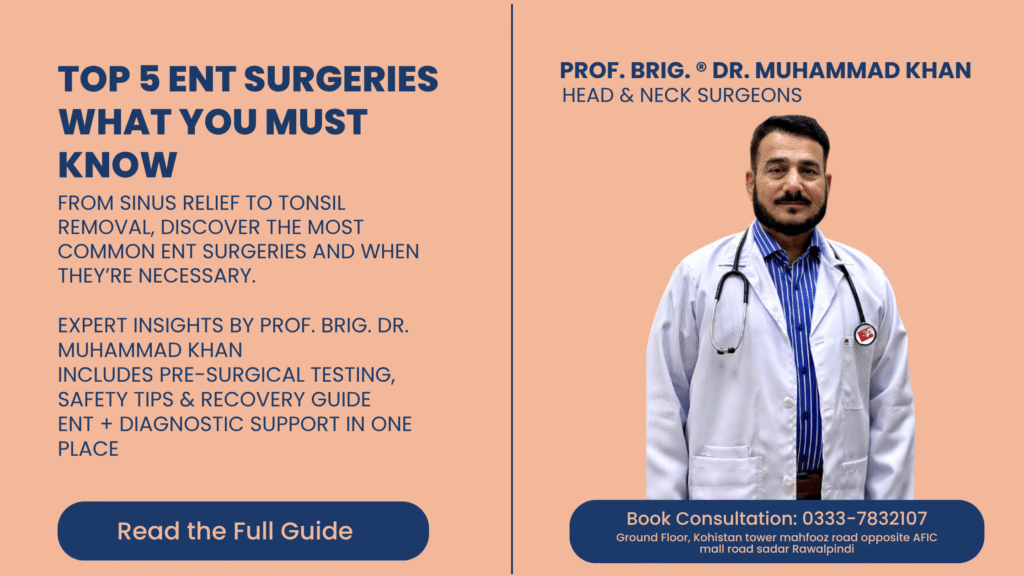
Why ENT Surgeries Are Essential
ENT (Ear, Nose, and Throat) conditions affect millions of people globally. From breathing difficulties to chronic infections and hearing issues, these disorders can significantly disrupt daily life. While many ENT problems can be treated with medication and lifestyle changes, some cases require surgical intervention. This article will guide you through the top five most common ENT surgeries performed at Khan ENT Clinic in Rawalpindi, explaining what each involves, who needs them, and how they improve quality of life.
Tonsillectomy – Removing Chronic Infections
What is it?
Tonsillectomy is the surgical removal of the tonsils – two lymphoid tissues located at the back of the throat. It’s commonly recommended for those suffering from frequent tonsillitis or sleep apnea.
Why is it performed?
- Recurrent bacterial tonsillitis (usually 7+ times in a year)
- Sleep-disordered breathing
- Tonsil stones causing bad breath
Procedure:
A simple 30–45-minute procedure done under general anesthesia. The patient usually goes home the same day.
Recovery:
Recovery takes about 10–14 days, with pain managed through medication. Soft foods and hydration are key.
Risks:
Mild bleeding, temporary throat pain, or infection – all manageable with proper post-operative care.
Functional Endoscopic Sinus Surgery (FESS)
What is it?
FESS is a minimally invasive surgery to treat chronic sinusitis and nasal polyps that haven’t responded to medication.
Why is it performed?
- Chronic or recurrent sinus infections
- Nasal obstruction due to polyps or anatomical deformities
- Facial pain, pressure, and congestion
Procedure:
Using a thin endoscope, the surgeon opens blocked sinus pathways to restore drainage. No external cuts are made.
Recovery:
Patients recover within 7–10 days. Nasal sprays and saline irrigation aid healing.
Risks:
Bleeding, infection, or nasal dryness – minimized by experienced surgical technique and follow-up.
Myringotomy with Grommet Insertion (Ear Tube Surgery)
What is it?
This procedure involves placing a small tube (grommet) in the eardrum to ventilate the middle ear and prevent fluid build-up.
Why is it performed?
- Recurrent ear infections in children
- Otitis media with effusion (fluid without infection)
- Hearing loss due to fluid accumulation
Procedure:
A quick outpatient surgery (10–15 minutes) often done for children under general anesthesia.
Recovery:
Fast recovery. Children return to normal activities within 24–48 hours.
Risks:
Minor ear discharge, temporary hearing fluctuations – rarely serious.
Septoplasty: Fixing a Deviated Nasal Septum
What is it?
Septoplasty corrects a deviated septum – the wall dividing the two nostrils – to improve airflow.
Why is it performed?
- Chronic nasal obstruction
- Difficulty breathing from one or both nostrils
- Frequent nosebleeds
Procedure:
Performed under general or local anesthesia, the surgeon repositions or removes deviated cartilage and bone.
Recovery:
Most patients recover in about a week. Nasal packing may be used to control bleeding.
Risks:
Swelling, crusting, and occasional recurrence if not maintained post-op.
Tympanoplasty: Repairing the Eardrum
What is it?
Tympanoplasty repairs a hole or rupture in the eardrum, often caused by infections, trauma, or chronic Eustachian tube dysfunction.
Why is it performed?
- Chronic ear discharge
- Hearing loss due to perforation
- Recurrent middle ear infections
Procedure:
Under local or general anesthesia, the surgeon uses a graft (usually from the patient’s own tissue) to close the perforation.
Recovery:
Takes about 2–3 weeks. Patients should avoid water and trauma to the ear during healing.
Risks:
Infection, hearing loss, or graft failure – but rare with proper care.
Integrated Diagnostic Support: Why It Matters
At Khan ENT Clinic & Life Care Lab, we don’t just perform surgeries. We provide complete diagnostic support including:
- CT Scans & X-rays for sinus and nasal assessments
- Audiometry (PTA) and Tympanometry for hearing evaluation
- Ultrasound and Lab Panels for surgical clearance and post-op care
This one-window solution helps ensure safe, precise, and efficient ENT treatment.
Choosing the Right Surgeon
Prof. Brig. Dr. Muhammad Khan brings decades of experience in ENT and head & neck surgeries. His precision, ethical care, and integration with diagnostic technology make Khan ENT Clinic a leading center for ENT surgeries in Rawalpindi.
When choosing where to have your surgery, ensure your ENT specialist:
- Has surgical and diagnostic facilities in one place
- Offers proper post-operative care plans
- Explains procedures and risks clearly
ENT surgeries, while common, are life-changing for many. Whether it’s relieving chronic sinus pain, restoring hearing, or improving breathing, these procedures dramatically improve daily living. If you or a loved one are experiencing ENT-related issues, timely consultation and diagnosis can lead to effective, minimally invasive solutions.