
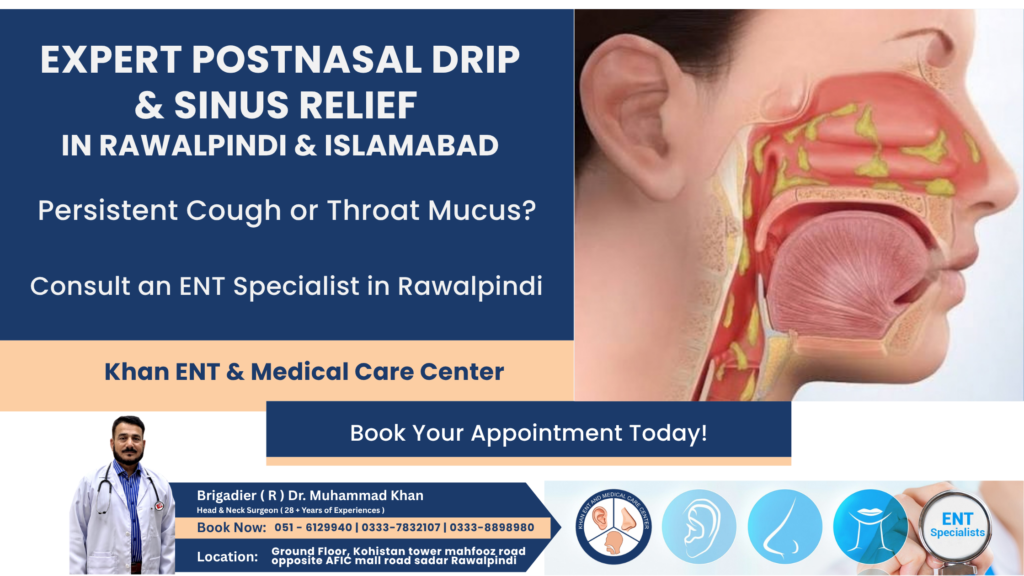
Postnasal Drip: Causes, Symptoms & Treatment is an important topic for people experiencing persistent mucus in the throat, frequent coughing, throat irritation, or a constant need to clear their throat. Postnasal drip occurs when excess mucus drains from the nose or sinuses into the back of the throat. Although normal mucus production helps protect the respiratory system, excessive drainage may indicate allergies, sinusitis, nasal inflammation, or acid reflux. At Khan ENT & Medical Care Center, Rawalpindi, Prof. Brig. (R) Dr. Muhammad Khan provides ENT assessment to help patients from Rawalpindi and Islamabad identify the underlying cause of their symptoms and understand appropriate treatment options.
What Is Postnasal Drip?
Postnasal drip occurs when mucus produced by the nose and sinuses accumulates or flows down the back of the throat more noticeably than usual. Mucus normally traps dust, allergens, and microorganisms while keeping the nasal passages moist. Most of it is swallowed without us noticing.
However, when mucus production increases or normal drainage is disrupted, it can irritate the throat and trigger coughing, frequent swallowing, or a sensation of something stuck in the throat.
Understanding Postnasal Drip: Causes, Symptoms & Treatment is important because the condition is a symptom rather than a disease in itself. Effective relief often depends on identifying and treating the underlying problem.
What Causes Postnasal Drip?
Several conditions can cause postnasal drip. Identifying the trigger helps an ENT specialist recommend suitable treatment.
Allergies and Allergic Rhinitis
Allergies are a common cause of excessive nasal mucus. Exposure to dust mites, pollen, mould, and other allergens can inflame the nasal lining and increase watery secretions.
People with allergic postnasal drip may also experience sneezing, nasal itching, congestion, and watery eyes. Reducing exposure to known allergens and using appropriate allergy medication may help control symptoms.
Sinusitis and Nasal Infections
Sinusitis develops when the tissues lining the sinuses become inflamed. Swelling can interfere with normal mucus drainage, causing congestion, facial pressure, headaches, and postnasal drip.
Colds and other respiratory infections can also increase mucus production. Some sinus infections are bacterial, but many are viral or associated with ongoing inflammation. Antibiotics are not appropriate for every case and should only be used when clinically indicated.
Deviated Nasal Septum
A deviated septum occurs when the wall separating the nasal passages is displaced. Depending on its severity, it may contribute to nasal blockage and impaired drainage.
An ENT specialist can assess whether a structural problem is contributing to persistent symptoms and whether medical management or surgery may be appropriate.
Acid Reflux and Throat Irritation
Gastroesophageal reflux disease (GERD) and laryngopharyngeal reflux (LPR) can cause throat irritation, coughing, hoarseness, and a sensation of mucus in the throat.
These symptoms can resemble postnasal drip even when excess nasal mucus is not the main problem. Recognising the difference is essential because reflux-related symptoms require a different management approach.
Environmental Irritants and Other Triggers
Smoke, dust, air pollution, dry air, weather changes, and strong fragrances may irritate the nasal passages. Certain medicines and hormonal changes can also affect nasal secretions.
For residents of Rawalpindi and Islamabad, identifying personal exposure to dust, smoke, and other environmental irritants may help with symptom management.
What Are the Symptoms of Postnasal Drip?
Postnasal drip symptoms can vary depending on the underlying cause. Common signs include:
- A feeling of mucus running down the back of the throat.
- Frequent throat clearing or swallowing.
- Persistent or recurring cough, sometimes worse at night.
- Sore, scratchy, or irritated throat.
- Hoarse voice or changes in voice quality.
- A sensation of a lump or something stuck in the throat.
- Nasal congestion, sneezing, or a runny nose.
- Bad breath or unpleasant taste.
- Nausea caused by swallowing excessive mucus.
Postnasal drip may also contribute to Eustachian tube dysfunction, which can cause ear pressure or a blocked-ear sensation. Ear pain or hearing changes should be assessed rather than automatically attributed to mucus.
How Is Postnasal Drip Diagnosed?
The diagnosis of postnasal drip begins with a review of symptoms, their duration, possible triggers, and any previous treatments. An ENT specialist may examine the nose, throat, ears, and related structures to look for inflammation, infection, nasal obstruction, or other abnormalities.
Depending on the findings, assessment may include:
- Nasal examination: Checks for congestion, swelling, discharge, and structural abnormalities.
- Nasal endoscopy: A small camera may be used to examine the nasal passages and areas of sinus drainage.
- Allergy assessment: May be considered when symptoms suggest allergic rhinitis.
- Further investigations: Imaging or other tests may be recommended when clinically necessary.
Persistent throat clearing or coughing does not always mean postnasal drip is responsible. Reflux, asthma, medication effects, and other conditions may need consideration.
Postnasal Drip: Causes, Symptoms & Treatment Options
The most effective postnasal drip treatment depends on the cause. There is no single medicine that works for every patient.
Home Remedies for Postnasal Drip
Mild symptoms may improve with simple supportive measures, including:
- Drinking adequate water to maintain hydration and help loosen thick mucus.
- Using a saline nasal spray to moisturise the nasal passages.
- Trying a saline nasal rinse when appropriate.
- Keeping the sleeping area clean and reducing exposure to dust and smoke.
- Using a clean humidifier if indoor air is excessively dry.
- Elevating the head slightly during sleep if drainage or reflux worsens at night.
For nasal irrigation, use distilled or sterile water, or water that has been boiled and allowed to cool. Never use untreated tap water for nasal rinsing.
Medication for Postnasal Drip
Medication should be selected according to the suspected cause.
- Antihistamines: May relieve symptoms associated with allergies.
- Corticosteroid nasal sprays: Help reduce nasal inflammation, particularly in allergic rhinitis.
- Saline sprays and rinses: Help moisturise the nose and clear secretions.
- Decongestants: May provide short-term relief for some patients but are unsuitable for certain medical conditions. Decongestant nasal sprays can worsen congestion if overused.
- Reflux treatment: May be recommended when GERD or LPR is contributing to symptoms.
- Antibiotics: Are reserved for infections where bacterial involvement warrants treatment.
Consult a healthcare professional before starting medication, especially if you have high blood pressure, other medical conditions, take regular medicines, or are treating a child.
Treatment for Chronic or Recurrent Postnasal Drip
When symptoms persist or repeatedly return, treating the underlying condition becomes especially important. Chronic sinusitis, significant nasal obstruction, ongoing allergies, and reflux may require targeted management.
In selected cases, an ENT specialist may recommend further investigations or a procedure. Surgery is not necessary for most people with postnasal drip and should only be considered when examination findings and clinical indications support it.
When Should You See an ENT Specialist?
Arrange an ENT assessment if postnasal drip persists despite home care, frequently returns, disrupts sleep, or is accompanied by ongoing nasal blockage, facial discomfort, recurrent ear problems, or a persistent cough.
Seek urgent medical care for difficulty breathing or swallowing, significant swelling, severe headache with concerning symptoms, or other rapidly worsening symptoms. Bloody nasal discharge, persistent hoarseness, or a new neck lump also warrant medical assessment.
Early evaluation can help distinguish uncomplicated mucus drainage from sinus disease, structural nasal problems, reflux, or other conditions that need specific treatment.
Why Consult Prof. Brig. (R) Dr. Muhammad Khan in Rawalpindi?
Residents of Rawalpindi and Islamabad experiencing persistent postnasal drip may benefit from assessment by an experienced ENT specialist who can evaluate the nose, sinuses, throat, and related structures.
At Khan ENT & Medical Care Center, Rawalpindi, Prof. Brig. (R) Dr. Muhammad Khan provides ENT assessment and management for patients with nasal congestion, sinus-related symptoms, throat irritation, recurrent ENT problems, and other ear, nose, and throat concerns.
An ENT consultation can help patients understand possible causes, determine whether further testing is needed, and discuss a treatment plan based on their symptoms and examination findings.
For patients travelling from Islamabad or different parts of Rawalpindi, a focused consultation can also help clarify whether symptoms are more consistent with allergies, sinusitis, nasal obstruction, or reflux. Treatment recommendations should always be individualised rather than based on symptoms alone.
Clinic: Khan ENT & Medical Care Center, Rawalpindi
Doctor: Prof. Brig. (R) Dr. Muhammad Khan
Frequently Asked Questions About Postnasal Drip
What is the main cause of postnasal drip?
Common causes include allergies, viral respiratory infections, sinusitis, nasal inflammation, environmental irritants, and acid reflux. The underlying cause varies between individuals.
How can I stop postnasal drip naturally?
Drinking adequate water, using saline nasal spray, reducing exposure to irritants, and keeping indoor air comfortable may help. Persistent symptoms need assessment to identify the cause.
What is the best medicine for postnasal drip?
There is no single best medicine for everyone. Antihistamines may help allergies, corticosteroid nasal sprays may reduce nasal inflammation, and reflux treatment may help when acid reflux is responsible. A clinician can advise on appropriate options.
Can postnasal drip cause a persistent cough?
Yes. Mucus drainage and upper-airway inflammation can irritate the throat and trigger coughing. However, asthma, reflux, infections, and other conditions can also cause a persistent cough.
Why is postnasal drip worse at night?
Symptoms may become more noticeable when lying down because mucus can accumulate in the throat. Nasal congestion and acid reflux may also contribute to nighttime coughing and irritation.
Can postnasal drip cause a sore throat?
Yes. Repeated mucus drainage and frequent throat clearing can irritate the throat, producing soreness, a scratchy sensation, or discomfort when swallowing.
Is postnasal drip a sign of a sinus infection?
It can be a symptom of sinusitis, especially when accompanied by nasal congestion, facial pressure, reduced sense of smell, or other sinus symptoms. Postnasal drip alone does not confirm a sinus infection.
Can postnasal drip last for months?
Yes. Symptoms may persist when the underlying cause is ongoing, such as allergic rhinitis, chronic sinusitis, or continued exposure to irritants. Long-lasting symptoms should be evaluated.
When should I see an ENT specialist for postnasal drip?
Consult an ENT specialist if symptoms persist, repeatedly return, interfere with sleep, or occur alongside ongoing nasal obstruction, facial pain, ear symptoms, or persistent hoarseness. Severe or rapidly worsening symptoms may require urgent care.
Where can I consult an ENT specialist for postnasal drip in Rawalpindi and Islamabad?
Patients can contact Khan ENT & Medical Care Center, Rawalpindi, to enquire about an appointment with Prof. Brig. (R) Dr. Muhammad Khan for assessment of postnasal drip and related ENT symptoms.