
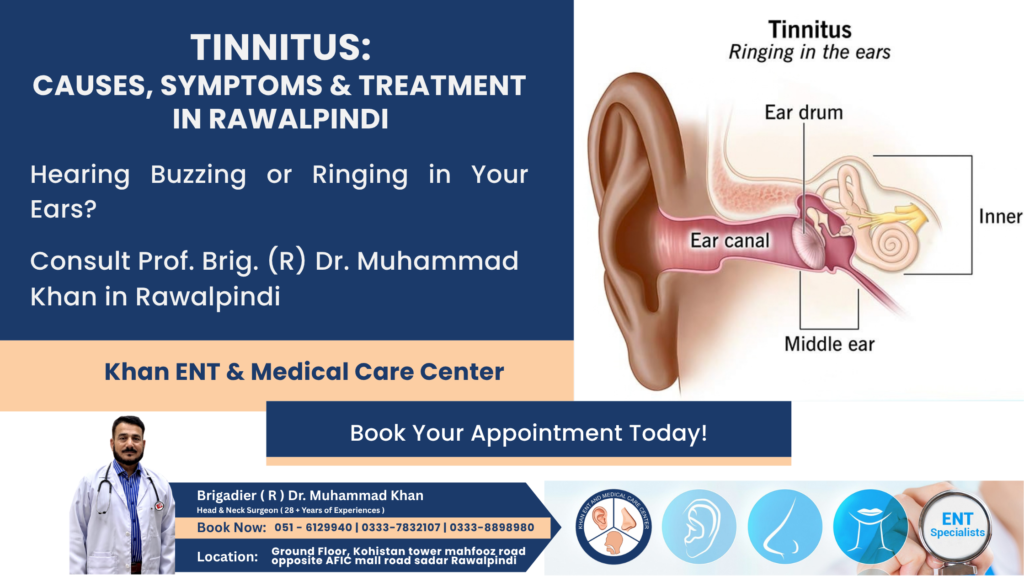
Tinnitus: Causes, Symptoms & Treatment Options in Rawalpindi is a critical topic for individuals experiencing persistent ringing, buzzing, or humming sounds without an external source. Tinnitus is a medical symptom rather than an independent disease, often indicating underlying auditory system strain, nerve irritation, or vascular changes. Residents across the twin cities of Rawalpindi and Islamabad frequently seek specialized evaluation when phantom ear sounds disrupt sleep, focus, and overall well-being. Understanding the physiological mechanisms, identifying warning indicators, and accessing modern clinical care in Rawalpindi allows patients to regain control over their hearing health.
Understanding Tinnitus and Its Causes
Tinnitus manifests when the auditory cortex generates sound perception in the absence of physical acoustic signals. The sound patterns vary significantly between individuals, ranging from high-pitched ringing and continuous hiss to low-frequency roaring, clicking, or rhythmic pulsing matched to the heartbeat. The primary physiological trigger involves damaged or overactive hair cells within the cochlea, which send irregular electrical impulses along the auditory nerve to the brain.
Common underlying causes include:
- Noise-Induced Hearing Loss: Exposure to loud machinery, traffic noise, firearms, or high-volume audio devices damages fragile inner ear structures.
- Age-Related Auditory Changes: Natural degeneration of inner ear nerve fibers over time leads to reduced hearing acuity and compensatory tinnitus.
- Ear Canal Blockages: Accumulated earwax or fluid buildup from middle ear infections alters pressure dynamics and amplifies internal sounds.
- Structural and Jaw Issues: Temporomandibular joint disorders, Eustachian tube dysfunction, and otosclerosis impact sound conduction.
- Medication Side Effects: High doses of certain nonsteroidal anti-inflammatory drugs, specific antibiotics, diuretics, and other pharmaceuticals can temporarily or permanently affect ear function.
- Vascular and Systemic Conditions: Hypertension, atherosclerosis, thyroid imbalances, and head or neck injuries can disrupt localized blood flow or neural pathways.
Recognizing these triggers is essential for pursuing targeted care rather than attempting unverified remedies.
Key Symptoms and Diagnostic Evaluation
The symptoms associated with tinnitus extend beyond phantom sounds. Patients often report secondary challenges that significantly impair daily performance and psychological comfort.
Frequently reported symptoms and related complications include:
- Constant or intermittent ringing, buzzing, whooshing, or whistling in one or both ears.
- Pulsatile sensations synchronized with the arterial pulse, signaling potential vascular involvement.
- Sleep disturbance, insomnia, and persistent night awakenings due to quiet environments emphasizing inner sounds.
- Reduced concentration, mental fatigue, and heightened irritability during daily activities.
- Accompanying dizziness, vertigo, or a feeling of ear fullness, which may indicate inner ear conditions like Ménière’s disease.
A thorough medical diagnostic assessment involves visual otoscopy to inspect the ear canal, comprehensive audiometric testing to map hearing thresholds, and specialized evaluations to check middle ear pressure. In cases of asymmetrical or pulsatile tinnitus, advanced radiological imaging may be ordered to exclude structural or vascular anomalies.
Advanced Treatment Options in Rawalpindi
Managing tinnitus requires a multidimensional clinical strategy tailored to individual etiology and lifestyle factors. While no single universal cure exists, evidence-based interventions successfully reduce symptom severity and restore quality of life.
Sound Therapy and Hearing Amplification
For patients with co-occurring hearing loss, modern digital hearing aids amplify ambient environmental sounds, naturally masking internal tinnitus. Specialized wearable sound generators and combination devices deliver customized acoustic stimulation to soothe overactive auditory neural networks.
Behavioral and Cognitive Strategies
Cognitive Behavioral Therapy and Tinnitus Retraining Therapy help reclassify phantom noise as neutral sensory background info. These methodologies retrain how the central nervous system processes sound, significantly reducing anxiety, stress, and sleep disturbance.
Medical and Surgical Interventions
When tinnitus stems from treatable physiological issues—such as impacted cerumen, Eustachian tube blockage, otosclerosis, or middle ear infections—direct medical or surgical intervention often alleviates or resolves the sound perception.
Expert Care at Khan ENT & Medical Care Center
For residents seeking accurate diagnosis and personalized rehabilitation, Tinnitus: Causes, Symptoms & Treatment Options in Rawalpindi are best addressed through specialized clinical expertise. Khan ENT & Medical Care Center stands as a premier facility dedicated to advanced otolaryngology services in the region.
Patients visiting Khan ENT & Medical Care Center, Rawalpindi receive consultation from Prof. Brig. (R) Dr. Muhammad Khan, a distinguished ENT specialist with extensive clinical and military medical experience.
Residents of Rawalpindi and Islamabad prefer consulting Prof. Brig. (R) Dr. Muhammad Khan at Khan ENT & Medical Care Center, Rawalpindi due to:
- Extensive Clinical Experience: Decades of specialized practice in diagnosing complex otological and auditory conditions.
- Comprehensive Diagnostic Infrastructure: State-of-the-art audiometric, endoscopic, and clinical evaluation tools available under one roof.
- Tailored Patient Management: Individualized treatment protocols combining medical management, sound therapy guidance, and clear patient counseling.
- Accessible Twin-City Location: Convenient access for patients across Rawalpindi, Islamabad, and surrounding districts.
Early professional evaluation ensures that underlying conditions are identified promptly, paving the way for effective symptom management.
Frequently Asked Questions
What is the main cause of tinnitus?
Tinnitus is most frequently caused by inner ear hair cell damage due to loud noise exposure or age-related hearing loss. Other common causes include earwax blockage, middle ear infections, jaw joint issues, and certain medications.
Can tinnitus be cured completely?
If tinnitus is caused by an underlying condition like earwax buildup, infection, or medication side effects, treating the root cause can eliminate the sound. For permanent inner ear damage, sound therapy and retraining techniques help manage symptoms effectively.
Is tinnitus a sign of a serious illness?
In the vast majority of cases, tinnitus is benign and linked to standard hearing changes. However, sudden onset in one ear, pulsatile tinnitus matching your heartbeat, or accompanying facial weakness requires immediate medical evaluation.
What should I do if I hear my heartbeat in my ear?
Hearing a rhythmic pulsing sound in time with your pulse is known as pulsatile tinnitus. This requires evaluation by an ENT specialist to check blood vessels and pressure dynamics near the ear structures.
How does noise exposure cause ear ringing?
Loud sound waves can bend or break tiny sensory hair cells inside the cochlea. Damaged hair cells can leak continuous electrical impulses to the brain, which interprets these signals as constant ringing or buzzing.
Can stress and lack of sleep make tinnitus worse?
Yes, stress and fatigue heighten central nervous system awareness, making internal ear sounds feel louder and more intrusive. Managing stress and practicing healthy sleep habits often helps soften the perception of tinnitus.
What treatments are available at Khan ENT & Medical Care Center?
At Khan ENT & Medical Care Center, patients receive comprehensive diagnostic evaluations, ear cleaning, otological treatments, acoustic masking strategies, and personalized counseling led by Prof. Brig. (R) Dr. Muhammad Khan.
Why should patients in Rawalpindi and Islamabad choose Prof. Brig. (R) Dr. Muhammad Khan?
Prof. Brig. (R) Dr. Muhammad Khan brings extensive military and civilian medical expertise in otolaryngology. Patients benefit from precise diagnostic protocols, advanced treatment options, and dedicated post-care management.
Do hearing aids help reduce tinnitus sounds?
Yes, hearing aids amplify external ambient sounds, which helps mask internal tinnitus noise while restoring overall hearing clarity for individuals with co-existing hearing loss.
When should I schedule an appointment for tinnitus evaluation?
You should schedule a consultation if phantom ear noise lasts more than a few days, interferes with sleep or concentration, occurs alongside sudden hearing loss, or causes significant anxiety.