
Eustachian Tube Dysfunction:
Eustachian Tube Dysfunction: Symptoms & Treatment in Rawalpindi is a frequent health concern for many patients experiencing muffled hearing, persistent ear fullness, and clicking sounds. When the small passages linking your middle ear space to the upper throat become inflamed or blocked, middle ear pressure cannot equalize properly. Searching for reliable care and information regarding it leads many individuals to seek high-quality clinical guidance to avoid long-term hearing complications. Understanding how this condition presents, why it occurs, and how specialized medical care resolves it is crucial for patients in the twin cities.
What Is Eustachian Tube Dysfunction?
The Eustachian tubes are tiny passages connecting the back of the nose and upper throat to the middle ears. Their primary job involves equalizing air pressure across the eardrum and draining normal middle ear secretions. Under healthy conditions, these tubes open brief moments when swallowing, yawning, or chewing.
When inflammatory swelling or fluid blockages stop these tubes from opening and closing properly, negative pressure builds up behind the eardrum. This physiological disruption causes noticeable pressure discomfort, sound dampening, and fluid buildup inside the middle ear chamber.
Primary Classifications of ETD
- Obstructive ETD: The passage stays closed or blocked due to inflammatory swelling, mucus, or tissue enlargement. This represents the vast majority of medical cases.
- Baro-Challenge ETD: Ear pressure equalization failure occurs specifically during rapid altitude modifications, such as air travel or mountain driving.
- Patulous ETD: The tube remains inappropriately open continuously, leading patients to hear their own voice echoing abnormally or sound of breathing within the ear canal.
Understanding the Causes Behind Ear Pressure Blockages
Many common respiratory and environmental triggers lead directly to mucosal swelling near the tube opening.
- Respiratory Viral Infections: Common colds, influenza, and viral upper respiratory tract infections cause severe nasal lining inflation.
- Allergies and Environmental Irritants: Seasonal allergic rhinitis, air pollution, and dust exposure trigger swelling in nasal passages.
- Sinus Infections: Chronic or acute rhinosinusitis creates persistent inflammatory drainage blocking the tube openings.
- Anatomical Factors: Enlarged adenoid tissues in young patients or structural nasal septum deviations hinder normal airflow and drainage.
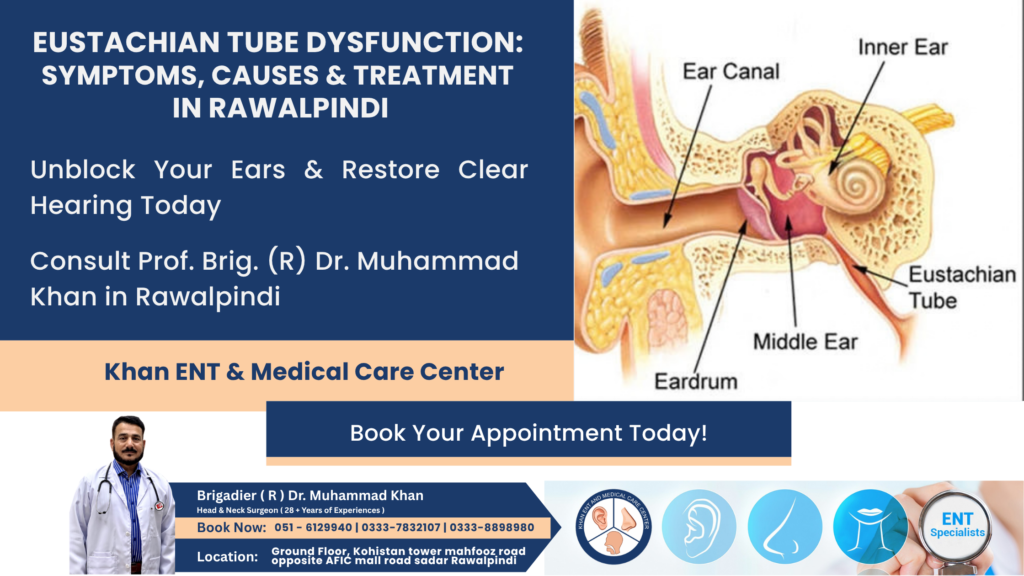
- Gastroesophageal Reflux Disease: Acid irritants reaching the back of the upper throat can induce chronic mucosal inflammation. Detailed anatomy of middle ear and drainage canal. Source: Alan Gesek/Stocktrek Images / Getty Images
Recognized Symptoms of Eustachian Tube Dysfunction
Recognizing the key signals allows patients to seek timely intervention before chronic fluid accumulation damages delicate ear structures.
- Ear Fullness and Pressure: A heavy, clogged sensation similar to holding water inside the ear canal.
- Muffled Hearing: Sounds seem distant, dull, or muffled due to restricted eardrum vibration.
- Clicking, Popping, or Crackling: Auditory sounds heard when swallowing, chewing, or attempting to equalize pressure.
- Tinnitus: Ringing, buzzing, or humming background sounds inside the affected ear.
- Otalgia or Ear Ache: Sharp or dull aching pain resulting from stretched, retracted eardrums under negative pressure.
- Mild Dizziness or Balance Disruption: Transient spatial disorientation caused by pressure imbalance affecting inner ear equilibrium.
Comprehensive Diagnostic Procedures
When seeking evaluation regarding Eustachian Tube Dysfunction: Symptoms & Treatment in Rawalpindi, specialist physicians perform step-by-step diagnostic assessments:
- Otoscopic Examination: Magnified inspection of the eardrum to check for retraction, fluid pooling, redness, or pressure strain.
- Tympanometry: Objective electronic testing that evaluates eardrum flexibility and measures middle ear air pressure levels.
- Pure Tone Audiometry: Comprehensive hearing tests to evaluate exact sound conduction levels and rule out sensorineural issues.
- Flexible Nasopharyngoscopy: Utilizing a slender endoscope to view the Eustachian tube openings at the back of the nasal cavity directly.
Specialized Management and Treatment Options
Treatment approaches vary based on severity, duration, and underlying root causes.
Home Techniques and Self-Care
For mild or acute cases following a brief cold, simple techniques assist natural pressure equalization:
- Frequent swallowing, yawning, or chewing motion.
- Performing gentle Valsalva maneuvers by exhaling lightly while holding mouth closed and nostrils pinched.
- Saline nasal rinses to clear excess mucus near nasal passage openings.
- Maintaining consistent hydration to keep mucosal secretions thin.
Medical Therapies
When symptoms persist beyond several days, professional medical intervention becomes necessary:
- Steroid Nasal Sprays: Targeted anti-inflammatory sprays reduce tissue swelling around the opening of the Eustachian tube.
- Antihistamine Medications: Useful when seasonal allergies or allergic rhinitis trigger continuous mucosal inflammation.
- Decongestant Therapies: Targeted short-term oral or nasal decongestants relieve acute congestion.
- Prescription Antibiotics: Warranted if secondary bacterial sinus or middle ear infections develop.
Advanced Surgical Solutions
Persistent, chronic Eustachian tube blockage unresponsive to medical therapies may require clinical procedures:
- Myringotomy with Grommet Insertion: Creating a micro-incision in the eardrum and placing a small ventilation tube to allow air entry and fluid drainage.
- Eustachian Tube Balloon Dilation: Threading a microscopic balloon catheter through the nose into the Eustachian tube to stretch the passage open safely.
Why Choose Prof. Brig. (R) Dr. Muhammad Khan at Khan ENT & Medical Care Center, Rawalpindi
For patients seeking gold-standard medical care for Eustachian Tube Dysfunction: Symptoms & Treatment in Rawalpindi, selecting an expert clinician ensures accurate diagnosis and effective long-term recovery.
Prof. Brig. (R) Dr. Muhammad Khan stands out as a premier Ear, Nose, and Throat specialist serving patients across Rawalpindi and Islamabad.
- Decades of Military and Academic Excellence: As a retired Brigadier with decades of clinical and surgical expertise in high-ranking medical institutions, Prof. Brig. (R) Dr. Muhammad Khan brings disciplined precision to patient management.
- Advanced Diagnostic Infrastructure: At Khan ENT & Medical Care Center, Rawalpindi, patients benefit from state-of-the-art diagnostic facilities including video endoscopy, tympanometry, and complete audiometric testing under one roof.
- Patient-Centered Custom Treatment: Rather than applying generic prescriptions, every patient receives an individualized treatment plan tailored to their specific underlying cause, whether allergic, structural, or infectious.
- Comprehensive Care for Adults and Children: Expert clinical handling for complex adult cases as well as pediatric ear conditions like glue ear and enlarged adenoids.
Frequently Asked Questions
What is the main cause of Eustachian Tube Dysfunction?
Swelling caused by upper respiratory viral infections, allergic rhinitis, or sinus conditions represents the most frequent underlying cause of Eustachian tube blockage.
How long does Eustachian tube dysfunction typically last?
Acute cases triggered by a cold often resolve naturally within one to two weeks. Chronic forms can last several weeks or months if left untreated.
Can Eustachian tube dysfunction clear up on its own?
Yes, mild cases frequently clear up spontaneously as nasal inflammation subsides following a cold or seasonal allergy flare.
When should I consult an ENT specialist in Rawalpindi for ear pressure?
If symptoms persist past two weeks, or if you experience increasing pain, persistent hearing reduction, severe tinnitus, or dizziness, immediate specialist consultation is recommended.
Is popping your ears safe when dealing with ETD?
Gentle popping through mild swallows or light pressure adjustments is safe, but forceful blowing against pinched nostrils should strictly be avoided to prevent eardrum damage.
Does allergy medication help relieve Eustachian tube pressure?
If allergic rhinitis is the primary cause of mucosal tissue swelling, antihistamines and steroid nasal sprays provide effective relief.
What happens if Eustachian tube dysfunction remains untreated for months?
Long-term untreated blockage can cause fluid accumulation (glue ear), middle ear infections, eardrum retraction, structural damage, and persistent hearing loss.
What is balloon Eustachian tuboplasty?
It is a minimally invasive procedure where a small balloon catheter is inserted into the Eustachian tube through the nose and inflated briefly to widen the passage.
Can Eustachian tube problems cause vertigo or dizziness?
Pressure imbalances within the middle ear space can affect the adjacent inner ear equilibrium mechanisms, resulting in unsteady sensations or mild dizziness.
Why is specialized evaluation at Khan ENT & Medical Care Center recommended?
Prof. Brig. (R) Dr. Muhammad Khan provides comprehensive diagnostic testing using flexible endoscopy and tympanometry to pinpoint the exact cause and deliver targeted medical or surgical care.