
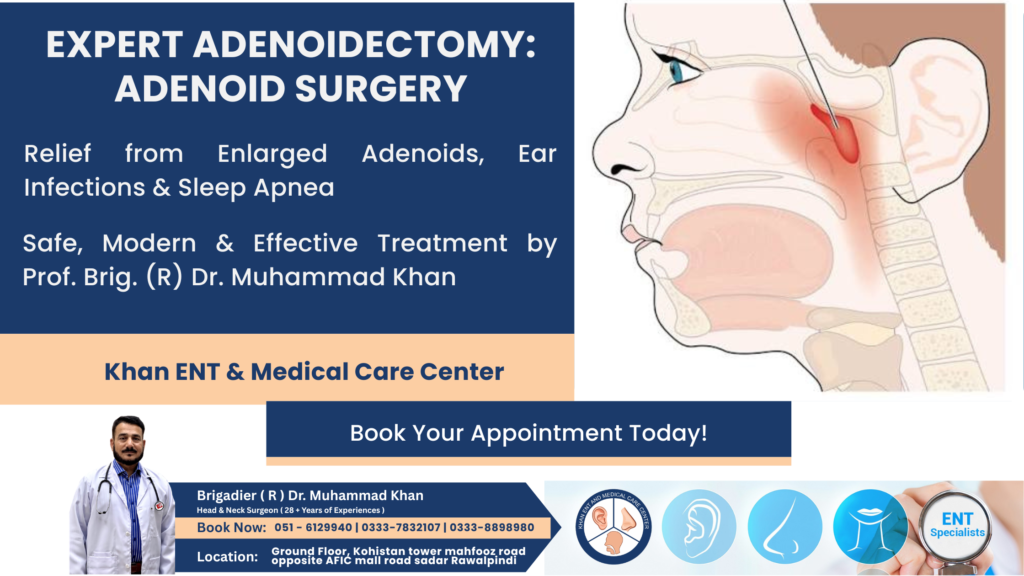
Adenoidectomy: Adenoid Surgery is one of the most common and effective ENT procedures performed to treat enlarged or infected adenoids in children and, in selected cases, adults. If enlarged adenoids are causing blocked nose, snoring, sleep apnea, frequent ear infections, or chronic sinus infections, Adenoidectomy: Adenoid Surgery can significantly improve breathing, sleep quality, hearing, and overall quality of life. At Khan ENT & Medical Care Center, Prof. Brig. (R) Dr. Muhammad Khan, a highly experienced ENT & Head and Neck Surgeon, provides comprehensive evaluation and advanced surgical treatment for adenoid disorders using evidence-based techniques.
What Is Adenoidectomy: Adenoid Surgery?
Adenoidectomy: Adenoid Surgery is a surgical procedure to remove the adenoids, which are small masses of lymphoid tissue located behind the nose and above the roof of the mouth. Together with the tonsils, adenoids help the immune system fight infections during early childhood.
However, repeated infections, allergies, or naturally enlarged adenoids may cause them to become chronically swollen. When this happens, they can block the airway, interfere with normal breathing, and lead to repeated infections. In these situations, Adenoidectomy: Adenoid Surgery becomes the most effective treatment.
Most adenoid surgeries are performed in children between the ages of 2 and 8 years, although adults with persistent enlarged adenoids may also require surgery.
What Are Adenoids?
Adenoids are part of the body’s immune defense system. They trap bacteria, viruses, and other harmful microorganisms entering through the nose. As children grow older, the importance of adenoids decreases because other immune tissues become more active. By adolescence, adenoids naturally shrink in most people.When adenoids remain enlarged or repeatedly infected, they can create several health problems that require Adenoidectomy: Adenoid Surgery.
When Is Adenoidectomy: Adenoid Surgery Needed?
Your ENT specialist may recommend Adenoidectomy: Adenoid Surgery if enlarged adenoids continue causing symptoms despite medications.
Common indications include:
- Persistent nasal blockage
- Difficulty breathing through the nose
- Chronic mouth breathing
- Loud snoring
- Obstructive sleep apnea
- Recurrent sinus infections
- Frequent ear infections
- Glue ear (middle ear fluid)
- Hearing loss due to Eustachian tube dysfunction
- Chronic bad breath caused by infected adenoids
- Speech affected by nasal obstruction
Children with sleep-disordered breathing often become tired, irritable, inattentive, and may struggle at school. Early treatment can prevent these complications.
Symptoms of Enlarged Adenoids
Parents should consult an ENT specialist if their child experiences:
- Constant blocked nose
- Breathing through the mouth
- Loud snoring every night
- Restless sleep
- Pauses in breathing during sleep
- Frequent sore throat
- Recurrent sinus infections
- Persistent runny nose
- Repeated ear infections
- Hearing difficulties
- Nasal voice
- Poor concentration
- Daytime sleepiness
These symptoms often improve dramatically after Adenoidectomy: Adenoid Surgery.
Causes of Enlarged Adenoids
Several conditions can lead to enlarged adenoids, including:
- Repeated viral infections
- Recurrent bacterial infections
- Seasonal allergies
- Chronic nasal inflammation
- Environmental pollution
- Genetic tendency
- Chronic sinus disease
How Is Adenoid Enlargement Diagnosed?
An experienced ENT surgeon performs a complete evaluation before recommending surgery.
Diagnosis may include:
- Detailed medical history
- Physical examination
- Nasal endoscopy
- Ear examination
- Hearing assessment
- Sleep assessment
- X-ray (selected cases)
- Allergy evaluation when necessary
Proper diagnosis ensures that Adenoidectomy: Adenoid Surgery is recommended only when truly beneficial.
How to Prepare for Adenoidectomy: Adenoid Surgery
Before surgery, your ENT surgeon will explain every step.
Preparation usually includes:
- Medical assessment
- Review of current medications
- Blood tests if required
- Fasting for several hours before surgery
- Informing the doctor about fever or recent infections
- Following anesthesia instructions carefully
Parents should also prepare their child emotionally by explaining that the surgery will help them breathe and sleep better.
What Happens During Adenoidectomy: Adenoid Surgery?
Adenoidectomy: Adenoid Surgery is performed under general anesthesia, meaning the patient remains asleep throughout the procedure.
The operation usually involves:
- Administration of general anesthesia.
- Opening the mouth using specialized instruments.
- Removing the enlarged adenoid tissue through the mouth.
- Controlling bleeding using modern surgical techniques such as electrocautery or suction cautery.
- Ensuring complete hemostasis before recovery.
No external cuts or stitches are required.
The surgery generally takes 20–30 minutes, and most patients return home on the same day.
Can Adenoidectomy Be Combined with Other Procedures?
Yes. Many patients undergo Adenoidectomy: Adenoid Surgery together with:
- Tonsillectomy
- Ear tube (grommet) insertion
- Treatment for glue ear
- Nasal endoscopy
Combining procedures reduces the need for multiple anesthetics and improves overall treatment outcomes.
Benefits of Adenoidectomy: Adenoid Surgery
The benefits are often noticeable within weeks.
Advantages include:
- Better nasal breathing
- Improved sleep quality
- Reduced snoring
- Relief from sleep apnea
- Fewer ear infections
- Better hearing
- Reduced sinus infections
- Improved speech
- Better concentration in school
- Increased daytime energy
- Enhanced quality of life
Children often become more active and healthier after surgery.
Risks of Adenoidectomy: Adenoid Surgery
Like any operation, Adenoidectomy: Adenoid Surgery carries small risks, although serious complications are uncommon.
Possible risks include:
- Mild bleeding
- Infection
- Temporary sore throat
- Fever
- Reaction to anesthesia
- Rare recurrence of adenoid tissue
- Temporary nasal speech
- Very rare excessive bleeding
Choosing an experienced ENT surgeon greatly minimizes these risks.
Recovery After Adenoidectomy: Adenoid Surgery
Recovery is generally quick.
Most children recover within 7–14 days.
During recovery, patients may experience:
- Mild sore throat
- Bad breath
- Nasal congestion
- Slight ear pain
- Mild fever
- Temporary noisy breathing
These symptoms usually improve within a few days.
Home Care After Adenoidectomy
To promote faster healing:
- Encourage plenty of fluids.
- Give soft foods such as yogurt, pudding, soup, mashed potatoes, and ice cream.
- Avoid spicy, hot, and crunchy foods.
- Give prescribed pain medicine as directed.
- Avoid smoke exposure.
- Ensure adequate rest.
- Avoid strenuous physical activity for two weeks.
- Attend follow-up appointments.
When Should You Contact Your ENT Surgeon?
Seek immediate medical attention if the patient develops:
- Heavy bleeding
- Persistent high fever
- Severe dehydration
- Difficulty breathing
- Inability to swallow fluids
- Severe pain not relieved with medication
- Repeated vomiting with blood
Why Choose Prof. Brig. (R) Dr. Muhammad Khan for Adenoidectomy: Adenoid Surgery?
For families in Rawalpindi and Islamabad, choosing an experienced ENT surgeon is essential for safe surgery and excellent outcomes.
Prof. Brig. (R) Dr. Muhammad Khan is one of the region’s most experienced ENT & Head and Neck Surgeons. With decades of surgical expertise, he provides comprehensive diagnosis and treatment for children and adults with adenoid disorders at Khan ENT & Medical Care Center, Rawalpindi.
Patients choose Prof. Brig. (R) Dr. Muhammad Khan because of:
- Extensive experience in ENT and head & neck surgery
- Accurate diagnosis using modern ENT evaluation
- Personalized treatment plans
- Child-friendly approach
- Advanced surgical techniques
- High standards of patient safety
- Ethical medical practice
- Comprehensive pre-operative and post-operative care
- Convenient access for patients from Rawalpindi and Islamabad
- Trusted reputation among families seeking expert ENT care
If your child experiences persistent snoring, mouth breathing, recurrent ear infections, or blocked nose, an early ENT consultation can help prevent long-term complications.
Frequently Asked Questions (FAQs)
What is Adenoidectomy: Adenoid Surgery?
It is a surgical procedure to remove enlarged or infected adenoids that cause breathing, sleep, or ear problems.
Is Adenoidectomy painful?
The surgery is performed under general anesthesia. Mild throat discomfort afterward is common and usually controlled with medication.
How long does Adenoidectomy take?
The procedure usually takes about 20–30 minutes.
Can adults undergo Adenoidectomy?
Yes. Although uncommon, adults with persistent enlarged adenoids may require surgery.
Will removing adenoids weaken the immune system?
No. The immune system continues to function normally after adenoid removal.
How long is the recovery period?
Most patients recover completely within one to two weeks.
Can adenoids grow back?
Rarely. Small amounts of tissue may regrow, but repeat surgery is uncommon.
When can my child return to school?
Most children return within 7–10 days, depending on their recovery and their surgeon’s advice.
Is Adenoidectomy performed with Tonsillectomy?
Yes. Many children have both procedures during the same operation if both adenoids and tonsils are causing symptoms.
Where can I get expert Adenoidectomy: Adenoid Surgery in Rawalpindi?
Patients from Rawalpindi and Islamabad can consult Prof. Brig. (R) Dr. Muhammad Khan at Khan ENT & Medical Care Center for comprehensive evaluation, expert surgical care, and complete post-operative follow-up for adenoid disorders.