
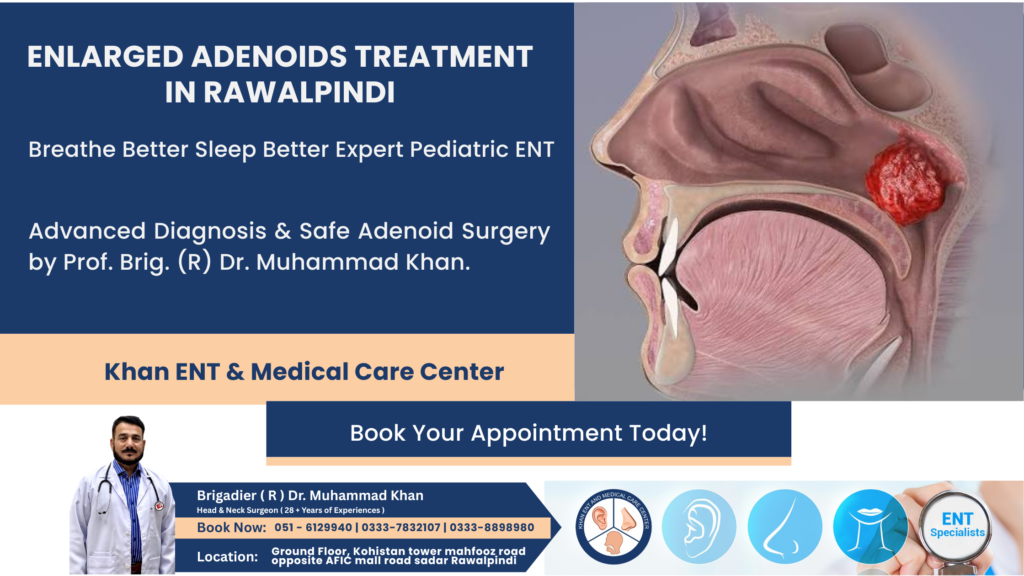
Enlarged Adenoids Treatment in Rawalpindi is one of the most effective solutions for children and adults suffering from chronic nasal blockage, mouth breathing, loud snoring, recurrent ear infections, and sleep-related breathing problems. Enlarged adenoids can significantly affect breathing, sleep quality, hearing, speech development, and overall quality of life if left untreated. Fortunately, with accurate diagnosis and modern ENT treatment, enlarged adenoids can be managed successfully through medication or minimally invasive adenoid surgery (adenoidectomy).
If you are searching for the best Enlarged Adenoids Treatment in Rawalpindi, Prof. Brig. (R) Dr. Muhammad Khan, a Senior ENT & Head and Neck Surgeon at Khan ENT & Medical Care Center, Rawalpindi, provides comprehensive diagnosis, medical management, pediatric ENT care, endoscopic evaluation, and advanced surgical treatment using evidence-based international guidelines.
What Are Adenoids?
Adenoids are small masses of lymphatic tissue located behind the nose and above the roof of the mouth. Together with the tonsils, they form part of the body’s immune defense system during early childhood.
Their primary functions include:
- Trapping bacteria and viruses entering through the nose
- Producing antibodies
- Supporting immune development during childhood
- Helping protect the upper respiratory tract
Unlike tonsils, adenoids cannot be seen by simply opening the mouth because they are located high behind the nasal cavity.
What Are Enlarged Adenoids?
Enlarged adenoids occur when these tissues become swollen due to repeated infections, allergies, or chronic inflammation. While temporary enlargement during infections is normal, some children develop persistent enlargement that blocks the nasal airway.
Persistent enlargement can interfere with:
- Normal breathing
- Sleeping
- Hearing
- Speech
- Facial growth in children
- Overall development
This is why seeking Enlarged Adenoids Treatment in Rawalpindi early is important before complications develop.
Who Is Most Commonly Affected?
Enlarged adenoids are most common in:
- Children aged 2–10 years
- Preschool children
- School-age children
- Children with allergies
- Children with frequent colds
- Children with recurrent sinus infections
Although uncommon, adults can also develop enlarged adenoids due to chronic infection, smoking, pollution exposure, immune disorders, or rarely tumors.
Causes of Enlarged Adenoids
Several conditions can cause adenoid enlargement.
Recurrent Infections
Frequent viral or bacterial infections repeatedly stimulate the adenoids, causing chronic swelling.
Common infections include:
- Common cold
- Flu
- Sinus infection
- Tonsillitis
- Ear infections
Allergies
Children with allergic rhinitis often develop chronically inflamed adenoids due to ongoing nasal inflammation.
Common allergens include:
- Dust mites
- Pollen
- Pet dander
- Mold
- Air pollution
Chronic Sinusitis
Persistent sinus infections keep the adenoids inflamed for months.
Genetic Predisposition
Some children naturally have larger adenoids even without infection.
Environmental Irritants
Exposure to:
- Cigarette smoke
- Air pollution
- Industrial chemicals
- Household smoke
can contribute to chronic enlargement.
Rare Adult Causes
Adult enlarged adenoids may occur because of:
- Chronic infection
- Smoking
- Allergies
- Lymphoma
- Nasopharyngeal tumors
- HIV-related lymphoid enlargement
Adults with persistent symptoms require complete ENT evaluation.
Symptoms of Enlarged Adenoids
The symptoms often develop gradually.
Common symptoms include:
- Persistent blocked nose
- Difficulty breathing through the nose
- Mouth breathing
- Loud snoring
- Restless sleep
- Sleep apnea
- Frequent awakening during sleep
- Dry mouth
- Cracked lips
- Bad breath
- Nasal speech
- Chronic runny nose
- Frequent colds
- Recurrent sinus infections
- Ear infections
- Hearing loss due to middle ear fluid
- Difficulty swallowing
- Poor concentration
- Daytime tiredness
Children with severe enlargement may develop the classic adenoid face, characterized by:
- Constant open mouth
- Long face
- Narrow upper jaw
- Dental crowding
- Poor facial growth
Warning Signs That Require ENT Consultation
Parents should seek Enlarged Adenoids Treatment in Rawalpindi if their child has:
- Snoring every night
- Mouth breathing during the day
- Pauses in breathing while sleeping
- Frequent ear infections
- Persistent blocked nose
- Hearing difficulties
- Delayed speech development
- Poor sleep quality
- Behavioral problems due to poor sleep
- Recurrent sinus infections
How Enlarged Adenoids Affect Your Child
Untreated enlarged adenoids can cause several complications.
Sleep Problems
Blocked airways reduce oxygen flow during sleep, causing:
- Poor-quality sleep
- Sleep apnea
- Restlessness
- Daytime fatigue
Ear Problems
The adenoids lie close to the Eustachian tube.
Enlargement can block this tube, causing:
- Fluid behind the eardrum
- Glue ear
- Repeated ear infections
- Temporary hearing loss
Sinus Problems
Blocked nasal passages prevent proper sinus drainage, increasing the risk of:
- Chronic sinusitis
- Persistent nasal congestion
- Facial pressure
Speech Problems
Children may develop:
- Nasal voice
- Delayed speech
- Poor pronunciation
Growth and Learning
Poor sleep may contribute to:
- Poor school performance
- Hyperactivity
- Reduced concentration
- Growth problems
Diagnosis of Enlarged Adenoids
Accurate diagnosis is essential before starting Enlarged Adenoids Treatment in Rawalpindi.
Medical History
The ENT specialist asks about:
- Snoring
- Mouth breathing
- Ear infections
- Nasal blockage
- Allergies
- Sleep disturbances
Physical Examination
A complete ENT examination includes:
- Nose
- Throat
- Tonsils
- Ears
- Neck
Nasal Endoscopy
Flexible nasal endoscopy is considered one of the best methods for evaluating enlarged adenoids.
It allows direct visualization of:
- Adenoid size
- Nasal obstruction
- Infection
- Sinus drainage
- Associated abnormalities
X-Ray Nasopharynx
An X-ray helps estimate the degree of airway obstruction when necessary.
Hearing Test
Children with repeated ear infections may require:
- Pure Tone Audiometry
- Tympanometry
Sleep Study
Children suspected of obstructive sleep apnea may undergo overnight sleep studies.
Enlarged Adenoids Treatment in Rawalpindi
Treatment depends on:
- Child’s age
- Severity
- Symptoms
- Frequency of infections
- Degree of obstruction
Medical Treatment
Mild cases often improve without surgery.
Treatment may include:
Nasal Steroid Spray
Helps reduce inflammation.
Allergy Medicines
Useful if allergies are contributing.
Saline Nasal Washes
Improve nasal hygiene.
Antibiotics
Only prescribed for bacterial infections.
Observation
Many children naturally outgrow enlarged adenoids as they age.
When Is Surgery Needed?
Adenoidectomy is recommended when enlarged adenoids cause persistent symptoms despite medical treatment.
Common indications include:
- Severe nasal blockage
- Chronic mouth breathing
- Obstructive sleep apnea
- Recurrent ear infections
- Glue ear
- Hearing loss
- Chronic sinus infections
- Failure of medications
- Poor quality of life
What Is Adenoidectomy?
Adenoidectomy is the surgical removal of enlarged adenoids.
It is:
- Safe
- Common
- Minimally invasive
- Performed under general anesthesia
- Usually completed within 20–30 minutes
Most children go home the same day.
Recovery After Adenoid Surgery
Recovery is generally quick.
Children may experience:
- Mild sore throat
- Bad breath
- Temporary nasal congestion
- Mild ear discomfort
- Slight nasal discharge
Recovery usually takes:
- 5–10 days
Children are encouraged to:
- Drink plenty of fluids
- Eat soft foods
- Rest adequately
- Avoid strenuous activity for several days
Are Enlarged Adenoids Dangerous?
Not usually.
However, untreated enlarged adenoids may lead to:
- Chronic sleep apnea
- Hearing loss
- Speech delay
- Chronic ear infections
- Facial growth abnormalities
- Poor school performance
- Persistent sinus disease
Early treatment helps prevent these complications.
Enlarged Adenoids in Adults
Although rare, adults may also require Enlarged Adenoids Treatment in Rawalpindi.
Possible causes include:
- Smoking
- Pollution
- Chronic infection
- Allergies
- Immune disorders
- Nasopharyngeal tumors
Adults with persistent nasal obstruction should undergo complete ENT evaluation.
Why Choose Prof. Brig. (R) Dr. Muhammad Khan?
When searching for the most trusted Enlarged Adenoids Treatment in Rawalpindi, experience and specialized ENT expertise matter.
Prof. Brig. (R) Dr. Muhammad Khan is one of Rawalpindi’s leading ENT & Head and Neck Surgeons with over 30 years of surgical experience. As a retired military consultant and former professor, he has extensive expertise in diagnosing and treating pediatric and adult ENT disorders.
Patients from Rawalpindi, Islamabad, Wah Cantt, Taxila, Gujar Khan, Murree, Chakwal, Attock, and surrounding areas choose him because of:
- Comprehensive ENT evaluation
- Child-friendly approach
- Advanced nasal endoscopy
- Evidence-based treatment plans
- Expertise in pediatric ENT surgery
- Modern adenoidectomy techniques
- Management of complex ENT conditions
- Ethical and patient-centered care
- Personalized follow-up after treatment
At Khan ENT & Medical Care Center, Rawalpindi, every patient receives a thorough assessment to determine whether medical management or surgery is the most appropriate option.
Preventing Enlarged Adenoids
Although not all cases can be prevented, you can reduce the risk by:
- Treating allergies promptly
- Avoiding cigarette smoke
- Maintaining good hand hygiene
- Managing sinus infections early
- Keeping vaccinations up to date
- Seeking timely ENT consultation for recurrent infections
Frequently Asked Questions (FAQs)
What are enlarged adenoids?
Enlarged adenoids are swollen lymphatic tissues behind the nose that can block the airway and cause breathing, sleeping, and ear problems.
What are the common symptoms of enlarged adenoids?
Symptoms include nasal blockage, mouth breathing, loud snoring, sleep apnea, frequent ear infections, hearing loss, sore throat, and chronic nasal congestion.
Is enlarged adenoid treatment available without surgery?
Yes. Mild cases may improve with nasal steroid sprays, allergy treatment, saline irrigation, antibiotics (when indicated), and observation.
When is adenoid surgery necessary?
Surgery is recommended when enlarged adenoids cause severe nasal obstruction, sleep apnea, recurrent ear infections, glue ear, hearing loss, or persistent symptoms despite medical treatment.
Is adenoidectomy safe for children?
Yes. Adenoidectomy is a safe, commonly performed procedure with a high success rate and a relatively quick recovery.
How long does recovery take after adenoid removal?
Most children recover within 5–10 days and return to normal activities shortly afterward.
Can adults develop enlarged adenoids?
Yes, although uncommon. Adults may develop enlarged adenoids due to chronic infection, allergies, smoking, or other underlying conditions requiring ENT evaluation.
Can enlarged adenoids cause hearing loss?
Yes. Enlarged adenoids can block the Eustachian tube, leading to fluid buildup behind the eardrum (glue ear), recurrent infections, and temporary hearing loss.
Who provides expert Enlarged Adenoids Treatment in Rawalpindi?
Prof. Brig. (R) Dr. Muhammad Khan at Khan ENT & Medical Care Center, Rawalpindi offers comprehensive diagnosis, medical treatment, endoscopic assessment, and advanced adenoid surgery for children and adults.
Why should Rawalpindi and Islamabad residents choose Prof. Brig. (R) Dr. Muhammad Khan?
Patients benefit from over 30 years of ENT surgical experience, advanced diagnostic facilities, evidence-based treatment, personalized care, expertise in pediatric ENT surgery, and a strong reputation for ethical, high-quality ENT services in Rawalpindi and Islamabad.