
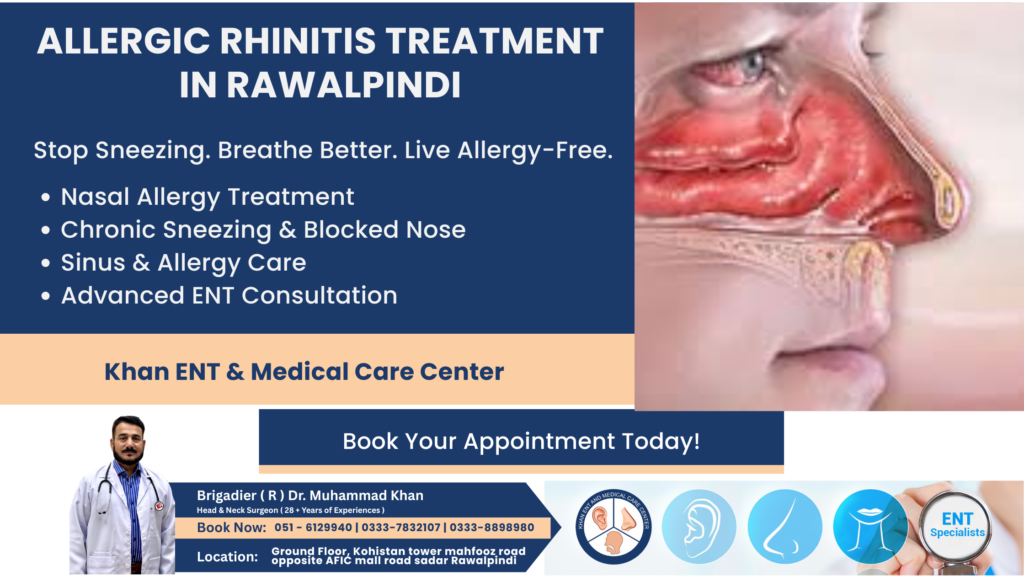
Allergic Rhinitis Treatment in Rawalpindi
It is one of the most searched healthcare services among people suffering from frequent sneezing, blocked nose, runny nose, itchy eyes, and seasonal allergies. It is commonly known as nasal allergy or hay fever, is a chronic inflammatory condition that affects the lining of the nose when the immune system reacts to allergens such as dust, pollen, mold, pet dander, smoke, or pollution.
If left untreated, allergic rhinitis can significantly affect your quality of life, causing disturbed sleep, poor concentration, sinus infections, ear problems, headaches, and worsening asthma symptoms. At Khan ENT & Medical Care Center, we provide comprehensive Allergic Rhinitis Treatment in Rawalpindi using modern diagnostic methods, personalized treatment plans, and advanced ENT care to help patients achieve long-term relief.
What is Allergic Rhinitis?
Allergic rhinitis is an allergic reaction that occurs when your immune system overreacts to harmless airborne particles known as allergens. When these allergens enter your nose, your body releases histamine and other inflammatory chemicals, resulting in nasal swelling and allergy symptoms.
Unlike the common cold, allergic rhinitis is not caused by a virus and cannot spread from person to person.
Millions of people worldwide suffer from allergic rhinitis, and it has become increasingly common in Rawalpindi due to rising air pollution, dust exposure, seasonal pollen, and environmental changes.
Why Allergic Rhinitis is Common in Rawalpindi
Many residents seek Allergic Rhinitis Treatment in Rawalpindi because of increasing environmental allergens, including:
- Heavy traffic pollution
- Construction dust
- Seasonal pollen from trees and grasses
- House dust mites
- Mold in damp homes
- Pet dander
- Smoke exposure
- Changing weather conditions
These factors continuously expose individuals to allergens, making allergic rhinitis one of the most common ENT conditions in Rawalpindi and Islamabad.
Types of Allergic Rhinitis
Seasonal Allergic Rhinitis
Seasonal allergies occur during specific seasons when pollen levels are high.
Common triggers include:
- Tree pollen
- Grass pollen
- Weed pollen
Symptoms become worse during spring and autumn.
Perennial Allergic Rhinitis
Perennial allergic rhinitis occurs throughout the year.
Common causes include:
- Dust mites
- Indoor molds
- Cockroaches
- Pet hair
- Animal dander
Patients often experience symptoms daily without seasonal variation.
Causes of Allergic Rhinitis
The immune system mistakenly identifies harmless allergens as dangerous substances.
Common allergens include:
- Dust mites
- Pollens
- Mold spores
- Pet dander
- Air pollution
- Cigarette smoke
- Perfumes
- Strong odors
- Household chemicals
- Cockroach allergens
Family history also plays a significant role. If one or both parents have allergies, asthma, or eczema, the risk increases considerably.
Symptoms of Allergic Rhinitis
Patients requiring Allergic Rhinitis Treatment in Rawalpindi commonly experience:
- Frequent sneezing
- Persistent runny nose
- Blocked or congested nose
- Itchy nose
- Itchy throat
- Itchy ears
- Watery eyes
- Red eyes
- Postnasal drip
- Chronic cough
- Mouth breathing
- Snoring
- Loss of smell
- Facial pressure
- Sinus headaches
- Fatigue
- Poor sleep quality
- Difficulty concentrating
Children may also develop:
- Allergic salute (frequent upward rubbing of the nose)
- Dark circles under the eyes
- Mouth breathing
- Sleep disturbances
- Poor school performance
Risk Factors
You are more likely to develop allergic rhinitis if you have:
- Family history of allergies
- Asthma
- Eczema
- Frequent exposure to dust
- Occupational exposure to chemicals
- Indoor pets
- Smoking exposure
- Weak indoor ventilation
Complications of Untreated Allergic Rhinitis
Without proper Allergic Rhinitis Treatment in Rawalpindi, complications may include:
- Chronic sinusitis
- Nasal polyps
- Ear infections
- Hearing problems
- Sleep apnea
- Snoring
- Poor concentration
- Asthma attacks
- Chronic cough
- Reduced quality of life
Early treatment prevents these complications and improves daily functioning.
Diagnosis of Allergic Rhinitis
An experienced ENT specialist diagnoses allergic rhinitis through:
Medical History
Your doctor asks about:
- Duration of symptoms
- Seasonal variation
- Family history
- Exposure to allergens
Physical Examination
The nose is examined using specialized ENT instruments.
Nasal Endoscopy
A painless endoscopic examination helps detect:
- Swollen nasal lining
- Nasal polyps
- Sinus blockage
- Deviated nasal septum
Allergy Testing
Depending on the patient, your doctor may recommend:
- Skin prick test
- Blood allergy tests (IgE)
- Specific allergen testing
Allergic Rhinitis Treatment in Rawalpindi
The goal of Allergic Rhinitis Treatment in Rawalpindi is to control symptoms, reduce inflammation, prevent complications, and improve quality of life.
Treatment usually includes:
Allergen Avoidance
The first step is minimizing exposure to allergens.
Helpful measures include:
- Using dust-proof mattress covers
- Cleaning carpets regularly
- Washing bedding weekly
- Keeping windows closed during high pollen seasons
- Using air purifiers
- Avoiding cigarette smoke
- Wearing masks in dusty environments
Antihistamine Medicines
Modern antihistamines reduce:
- Sneezing
- Itching
- Runny nose
- Watery eyes
They usually cause fewer side effects than older medications.
Nasal Steroid Sprays
These are considered the most effective treatment for persistent allergic rhinitis.
Benefits include:
- Reduces inflammation
- Opens blocked nose
- Improves breathing
- Prevents recurrence
Saline Nasal Irrigation
Saltwater nasal rinses help:
- Remove allergens
- Reduce mucus
- Improve nasal hygiene
- Relieve congestion
Decongestants
Short-term use of decongestants may relieve severe nasal blockage but should only be used under medical supervision.
Leukotriene Receptor Antagonists
These medicines may benefit patients who have both allergic rhinitis and asthma.
Immunotherapy (Allergy Shots)
For patients with persistent allergies despite medication, immunotherapy gradually reduces sensitivity to allergens.
Benefits include:
- Long-term improvement
- Reduced medication dependence
- Better quality of life
Lifestyle Tips for Allergy Prevention
To reduce allergy attacks:
- Keep your home dust-free.
- Vacuum regularly using HEPA filters.
- Wash bed sheets weekly in hot water.
- Avoid outdoor activities during high pollen counts.
- Wear sunglasses outdoors.
- Shower after returning home.
- Avoid smoking.
- Keep indoor humidity under control.
- Stay hydrated.
- Follow your prescribed medications regularly.
When Should You Visit an ENT Specialist?
Seek Allergic Rhinitis Treatment in Rawalpindi if you have:
- Symptoms lasting more than two weeks
- Frequent sneezing attacks
- Constant blocked nose
- Recurrent sinus infections
- Poor sleep
- Snoring
- Loss of smell
- Ear blockage
- Chronic cough
- Symptoms not improving with over-the-counter medicines
Why Choose an ENT Specialist Instead of Self-Medication?
Many patients repeatedly use allergy tablets without identifying the actual cause.
An experienced ENT specialist can:
- Diagnose the exact condition
- Identify underlying nasal problems
- Detect nasal polyps
- Rule out chronic sinus disease
- Recommend allergy testing
- Create an individualized treatment plan
- Prevent long-term complications
Why Choose Khan ENT & Medical Care Center?
At Khan ENT & Medical Care Center, we provide comprehensive Allergic Rhinitis Treatment in Rawalpindi with a patient-centered approach.
Our services include:
- Complete ENT consultation
- Nasal endoscopy
- Allergy evaluation
- Personalized treatment plans
- Medical management
- Long-term allergy control
- Advanced sinus care
- Treatment for adults and children
- Follow-up care and prevention guidance
Our goal is not only to relieve symptoms but also to improve your overall quality of life.
Allergic Rhinitis Treatment in Rawalpindi should never be delayed if you suffer from persistent sneezing, nasal blockage, itching, or watery eyes. Early diagnosis and proper treatment can prevent chronic sinus infections, nasal polyps, sleep disturbances, and asthma flare-ups. By combining allergen avoidance, appropriate medications, lifestyle modifications, and specialized ENT care, most patients achieve excellent long-term control of their symptoms.
If you are experiencing recurring nasal allergy symptoms, consult an experienced ENT specialist like Prof. Brig. (R) Dr. Muhammad Khan in Khan ENT & Medical Care Center for accurate diagnosis and personalized treatment.
Frequently Asked Questions (FAQs)
1. What is allergic rhinitis?
Allergic rhinitis is an allergic reaction that causes sneezing, runny nose, nasal congestion, itching, and watery eyes after exposure to allergens such as dust, pollen, mold, or pet dander.
2. Who provides the best Allergic Rhinitis Treatment in Rawalpindi?
An experienced ENT specialist with expertise in nasal allergies, allergy evaluation, and long-term management is the best choice for effective treatment.
3. Is allergic rhinitis curable?
While it may not always be completely cured, symptoms can be effectively controlled with medications, allergen avoidance, and immunotherapy.
4. Can allergic rhinitis cause sinus infections?
Yes. Untreated allergic rhinitis can block sinus drainage and increase the risk of chronic sinus infections.
5. How is allergic rhinitis diagnosed?
Diagnosis involves a medical history, ENT examination, nasal endoscopy, and, when necessary, allergy testing.
6. Which treatment is most effective for allergic rhinitis?
Intranasal corticosteroid sprays are generally the most effective long-term treatment, often combined with antihistamines and allergen avoidance.
7. Can children develop allergic rhinitis?
Yes. Allergic rhinitis is common in children and may cause mouth breathing, snoring, frequent nose rubbing, and difficulty concentrating.
8. What allergens commonly trigger allergic rhinitis in Rawalpindi?
Dust mites, seasonal pollen, construction dust, pollution, mold, pet dander, and cigarette smoke are common triggers.
9. Can allergic rhinitis affect sleep?
Yes. Nasal congestion can lead to poor sleep quality, snoring, fatigue, and reduced daytime productivity.
10. When should I consult an ENT specialist for allergic rhinitis?
You should consult an ENT specialist if your symptoms persist for more than two weeks, interfere with daily life, recur frequently, or do not improve with over-the-counter medications.