
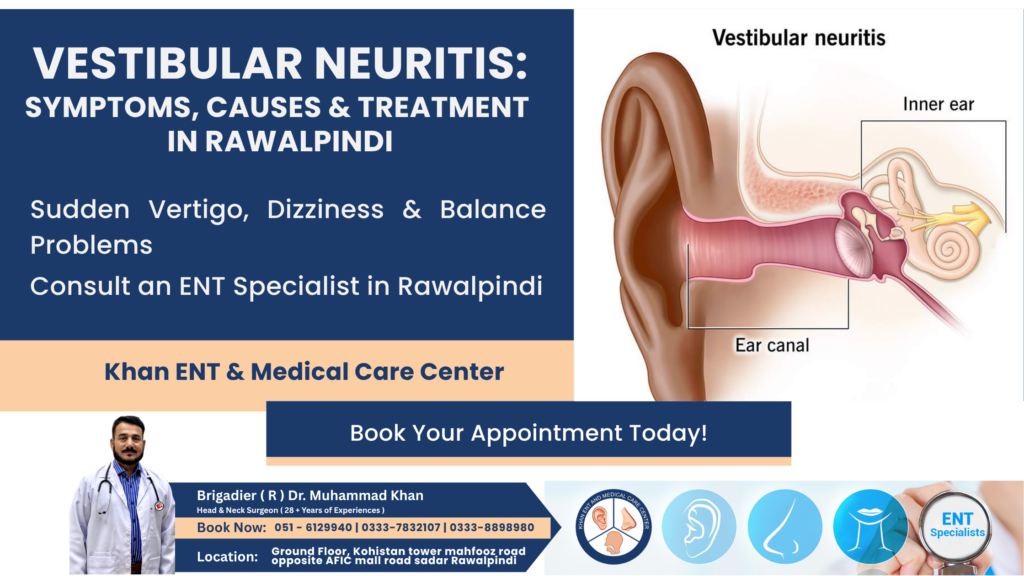
Vestibular Neuritis: Symptoms & Treatment is an important topic for anyone experiencing sudden vertigo, severe dizziness, nausea, or difficulty maintaining balance. Vestibular neuritis is an inner-ear balance disorder involving inflammation or dysfunction of the vestibular nerve, which carries information about head movement and position to the brain. The condition can develop suddenly and may cause intense spinning, unsteadiness, nausea and difficulty walking. Early medical assessment is important because similar symptoms can sometimes occur with other vestibular or neurological conditions.
What Is Vestibular Neuritis?
Vestibular neuritis occurs when the vestibular nerve becomes inflamed or its function is suddenly reduced. This nerve is part of the balance system and works with the eyes, brain and muscles to help maintain posture and orientation.
When signals from one vestibular system become weaker or disrupted, the brain receives unequal information from the two sides. This mismatch can produce sudden vertigo, dizziness, nausea, abnormal eye movements and imbalance.
The exact cause of vestibular neuritis is not always established. Viral infections are considered a possible trigger, although other mechanisms have also been investigated. Therefore, vestibular neuritis should not automatically be assumed to be caused by an active ear infection.
Vestibular Neuritis Symptoms
Vestibular neuritis symptoms usually begin suddenly and can be severe. Common symptoms include:
- Sudden spinning vertigo
- Severe dizziness or unsteadiness
- Difficulty standing or walking
- Nausea and vomiting
- Sensitivity to head movement
- Abnormal involuntary eye movements called nystagmus
- Difficulty concentrating
- A feeling of imbalance or being pulled toward one side
- Motion sensitivity
- Persistent dizziness after the initial vertigo improves
The most intense symptoms often occur during the acute stage. As the brain begins to compensate for the imbalance in vestibular signals, severe spinning may improve while mild dizziness, imbalance or motion sensitivity can continue.
Vestibular neuritis usually affects balance rather than hearing. If significant sudden hearing loss or prominent tinnitus occurs with acute vertigo, another inner-ear condition such as labyrinthitis or another cause should be considered and medically evaluated.
What Causes Vestibular Neuritis?
The exact cause of vestibular neuritis remains uncertain. Viral infection or reactivation of a latent virus has traditionally been considered a possible mechanism. Research has also examined vascular and immune-related mechanisms.
Some people notice vestibular symptoms after a viral illness such as a cold or flu, but a preceding infection is not required for the diagnosis.
Importantly, vestibular neuritis itself is not generally considered contagious. A virus that may trigger inflammation can be contagious, but the vestibular disorder itself is not something another person catches from you.
How Is Vestibular Neuritis Diagnosed?
A proper diagnosis begins with a detailed medical history and examination. The doctor will assess the onset and duration of vertigo, associated symptoms, eye movements, walking ability, balance and neurological signs.
Depending on the clinical findings, vestibular testing may be recommended. Tests can include:
- Head impulse testing
- Video head impulse testing
- Vestibular function testing
- Hearing assessment
- VNG or videonystagmography
- Caloric testing
- Vestibular evoked myogenic potentials
- Balance and postural assessment
- MRI when clinically indicated
Vestibular testing can help determine whether dizziness is associated with an inner-ear balance problem or another neurological or medical condition.
Because sudden persistent vertigo can occasionally resemble a stroke or other central neurological disorder, appropriate medical evaluation is particularly important when symptoms are severe, unusual or accompanied by neurological warning signs.
Vestibular Neuritis vs Labyrinthitis
Both can cause similar symptoms, but they are not identical.
It primarily affects the vestibular portion of the inner-ear balance system and generally does not cause significant hearing loss.
Labyrinthitis involves the inner-ear structures responsible for hearing and balance, so hearing loss and tinnitus may occur along with vertigo and imbalance.
A hearing evaluation can therefore be useful when vertigo is accompanied by changes in hearing.
Vestibular Neuritis vs BPPV
Vestibular neuritis can sometimes be confused with benign paroxysmal positional vertigo, commonly called BPPV.
BPPV is associated with displaced calcium carbonate crystals in the inner ear and typically produces brief episodes of positional vertigo when the head moves into particular positions.
Vestibular neuritis usually produces a more sustained episode of vertigo and imbalance rather than only brief positional attacks. A clinical examination helps distinguish between these conditions.
Vestibular Neuritis Treatment
Vestibular Neuritis: Symptoms & Treatment depends on the severity of symptoms, the stage of the disorder and the underlying clinical findings.
Medication for Acute Symptoms
During severe acute symptoms, a doctor may prescribe medication to reduce nausea, vomiting and vertigo. Vestibular suppressants may provide short-term relief, particularly when symptoms are intense.
However, prolonged use of vestibular-suppressant medication may interfere with the brain’s natural vestibular compensation. Medication should therefore be used according to a healthcare professional’s instructions rather than continued independently for an extended period.
Corticosteroids
Corticosteroids may be considered during the acute stage for selected patients. Research has reported possible benefits for vestibular recovery, but evidence regarding their effect on long-term outcomes is not completely consistent.
For this reason, steroids should not be self-prescribed. An ENT specialist should determine whether they are appropriate after considering the patient’s symptoms, timing and medical history.
Vestibular Rehabilitation Therapy
It is an important part of Vestibular Neuritis: Symptoms & Treatment, particularly when dizziness, imbalance or gaze instability continues after the acute stage.
This uses individualized exercises designed to help the brain adapt to altered balance signals. Depending on the patient’s findings, therapy may include:
- Gaze stabilization exercises
- Head movement exercises
- Balance training
- Walking and gait exercises
- Habituation exercises
- Postural control exercises
- Customized home exercises
Clinical practice guidance supports vestibular rehabilitation for people with unilateral vestibular hypofunction because it can improve dizziness, gaze stability, balance and functional recovery.
The exercises should be selected according to the patient’s condition. Performing unsuitable exercises without assessment may aggravate symptoms or increase fall risk.
Recovery From Vestibular Neuritis
Recovery varies between individuals. Severe vertigo often improves substantially after the acute phase, but some people continue to experience dizziness, imbalance or sensitivity to movement.
The brain gradually adapts to the difference in vestibular signals through a process known as vestibular compensation. Staying appropriately active and following an individualized vestibular rehabilitation program can support this process.
Persistent dizziness should not simply be ignored. If symptoms continue, worsen or interfere with walking, work or daily activities, further evaluation may be necessary.
When Should You Seek Urgent Medical Care?
Sudden vertigo should receive prompt medical attention when it is severe or unexplained.
Seek emergency medical assessment if vertigo occurs with symptoms such as:
- Facial weakness
- Slurred speech
- New difficulty speaking
- Double vision
- Severe sudden headache
- New limb weakness or numbness
- Loss of consciousness
- Inability to stand or walk
- Sudden significant hearing loss
These symptoms can indicate conditions other than vestibular neuritis and require urgent evaluation.
Vestibular Neuritis Treatment in Rawalpindi and Islamabad
For residents of Rawalpindi and Islamabad experiencing persistent vertigo, dizziness or balance problems, an ENT evaluation can help determine whether symptoms are related to the inner ear, vestibular nerve or another condition.
Prof. Brig. (R) Dr. Muhammad Khan at Khan ENT & Medical Care Center, Rawalpindi, provides ENT evaluation for ear, hearing and balance-related concerns. The clinic is located at Ground Floor, Kohistan Tower, Mahfooz Road, opposite AFIC/Mall Road, Saddar, Rawalpindi. The center also provides audiology and hearing assessment services.
Residents of Rawalpindi and Islamabad may consider an ENT evaluation at the center because assessment of vertigo can require more than simply treating dizziness. An ENT specialist can evaluate the ears and related symptoms, consider alternative diagnoses and determine whether hearing or vestibular testing is appropriate. Prof. Brig. (R) Dr. Muhammad Khan is identified by the clinic as its senior ENT specialist, with extensive experience in ENT and head and neck care.
Frequently Asked Questions About Vestibular Neuritis
What is vestibular neuritis?
Vestibular neuritis is a disorder involving inflammation or dysfunction of the vestibular nerve, which carries balance information from the inner ear to the brain. It can cause sudden vertigo, dizziness, nausea and imbalance.
What are the main symptoms of vestibular neuritis?
The main symptoms include sudden severe vertigo, dizziness, imbalance, nausea, vomiting, motion sensitivity and abnormal eye movements. Hearing is usually not significantly affected.
Can vestibular neuritis cause hearing loss?
Significant hearing loss is not typical of vestibular neuritis. When vertigo occurs together with hearing loss, conditions such as labyrinthitis or other inner-ear disorders should be considered.
Is vestibular neuritis caused by a virus?
A viral trigger is considered possible, particularly because vestibular neuritis can occur around the time of a viral illness. However, the exact cause is not always known.
How is vestibular neuritis diagnosed?
Diagnosis involves medical history, physical and neurological examination, eye-movement assessment and, when appropriate, hearing and vestibular tests. Imaging may be recommended when another neurological cause needs to be excluded.
What is the treatment for vestibular neuritis?
Treatment may include short-term medication for severe nausea or vertigo, selected use of corticosteroids and vestibular rehabilitation. Treatment should be individualized by a qualified healthcare professional.
Does vestibular rehabilitation help vestibular neuritis?
Yes. Vestibular rehabilitation can help improve dizziness, balance, gaze stability and functional recovery in people with unilateral vestibular dysfunction.
How long does vestibular neuritis last?
The most severe vertigo often improves during the early recovery period, but residual dizziness or imbalance can continue for weeks or longer in some people. Recovery varies according to the individual and the degree of vestibular dysfunction.
Is vestibular neuritis the same as BPPV?
No. Vestibular neuritis involves dysfunction of the vestibular nerve, while BPPV is associated with displaced inner-ear crystals. Their symptoms can overlap, but their diagnosis and treatment are different.
When should I see an ENT specialist for vestibular neuritis?
You should seek medical evaluation for sudden or persistent vertigo, unexplained balance problems, recurrent dizziness or symptoms that are not improving. Emergency evaluation is particularly important when vertigo occurs with neurological warning signs or sudden hearing loss.