
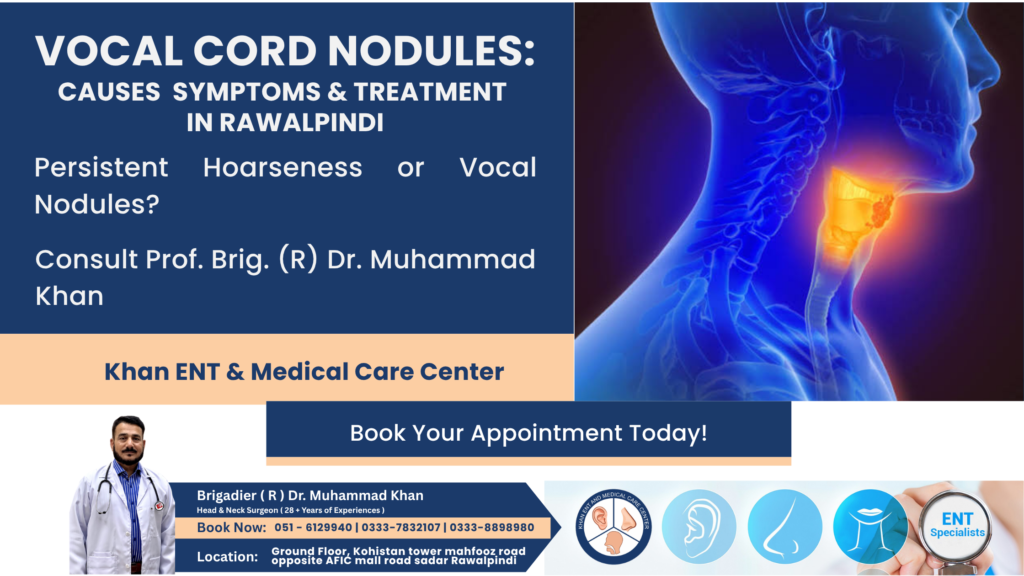
Vocal Cord Nodules: Causes, Symptoms & Treatment in Rawalpindi is an important topic for anyone experiencing persistent hoarseness, a rough or breathy voice, vocal fatigue, or difficulty speaking or singing normally. Vocal cord nodules are benign, noncancerous growths that usually develop because of repeated voice overuse or misuse. They are particularly common among people who use their voices extensively, including teachers, singers, public speakers, call-center workers, coaches, lawyers and other professional voice users.
For residents searching for Vocal Cord Nodules: Causes, Symptoms & Treatment in Rawalpindi, understanding the condition early can help prevent prolonged voice problems. In many cases, vocal nodules improve with appropriate voice rest, vocal hygiene and voice therapy. However, persistent hoarseness should not simply be ignored because several other vocal cord conditions can produce similar symptoms.
What Are Vocal Cord Nodules?
Vocal cord nodules are small, benign growths that develop on the vocal folds inside the larynx, commonly called the voice box. Your vocal cords come together and vibrate as air passes between them, producing your voice.
When the vocal cords are repeatedly exposed to excessive pressure, shouting, prolonged speaking or incorrect voice technique, the delicate tissues can become irritated and swollen. Continued strain may eventually lead to the formation of firm, callus-like nodules. They often develop on both vocal cords at corresponding areas where the cords repeatedly make contact.
Vocal cord nodules are not cancer. However, the symptoms can significantly affect communication, professional performance and quality of life. This is especially important for singers, teachers and other people whose careers depend on having a clear and reliable voice.
Vocal Cord Nodules Causes
The most common cause of vocal cord nodules is repeated overuse or misuse of the voice. Speaking loudly, shouting, singing incorrectly or talking continuously for long periods can place excessive stress on the vocal cords.
Common factors associated with vocal cord irritation include:
- Frequent shouting or yelling
- Speaking loudly for extended periods
- Prolonged professional voice use
- Incorrect singing technique
- Speaking continuously without adequate vocal rest
- Repeated throat clearing or chronic coughing
- Smoking or exposure to tobacco smoke
- Acid reflux or laryngopharyngeal reflux
- Allergies and nasal or sinus problems
- Using the voice heavily during a respiratory infection
- Poor breathing or voice-production technique
Professional voice users are particularly vulnerable. Teachers may need to project their voices throughout the day, while singers may repeatedly place significant demands on their vocal folds. Coaches, lecturers, sales professionals, public speakers and call-center employees can also experience voice strain.
Children can develop vocal nodules as well, particularly when they frequently scream, shout or use their voices forcefully.
Vocal Cord Nodules Symptoms
The most common symptom of vocal cord nodules is persistent hoarseness. Your voice may sound rough, raspy, breathy or strained.
Other symptoms may include:
- Vocal fatigue after speaking
- Reduced vocal strength
- A voice that breaks or changes unexpectedly
- Difficulty reaching high or low notes
- Reduced singing range
- Frequent throat clearing
- A sensation of throat discomfort
- Difficulty projecting the voice
- Temporary loss of voice
- Increased effort required for speaking
- Voice quality becoming worse with prolonged use
Singers may notice that certain notes become difficult to produce. Teachers and professional speakers may find that their voices become tired toward the end of the working day.
These symptoms are not exclusive to vocal nodules. Laryngitis, vocal cord polyps, vocal cord cysts, vocal cord paralysis, reflux-related irritation and other conditions can cause similar voice changes. Therefore, proper examination is important before assuming that hoarseness is caused by nodules.
Who Is at Higher Risk of Vocal Cord Nodules?
People who depend heavily on their voices are at greater risk. Professional singers are a well-known example, but vocal nodules can affect anyone who repeatedly strains their vocal cords.
Teachers, lecturers, lawyers, coaches, sales professionals, religious speakers, performers and call-center employees may be exposed to prolonged voice use. Children who frequently scream or shout can also develop vocal nodules.
Poor vocal technique can increase the strain placed on the vocal folds. Speaking from the throat, forcing the voice to be louder than necessary and continuing to speak when the voice is already tired can contribute to vocal injury.
Smoking, reflux, allergies, sinus problems and respiratory infections may further irritate the vocal cords and make recovery more difficult.
How Are Vocal Cord Nodules Diagnosed?
A proper diagnosis begins with an ENT examination and a detailed discussion about your symptoms and voice use. Your ENT specialist may ask when the hoarseness started, whether it becomes worse with speaking, whether you sing professionally and whether you have reflux, allergies, smoking exposure or recurrent throat irritation.
Laryngoscopy is commonly used to examine the larynx and vocal cords. A flexible endoscope can allow the specialist to see the vocal folds directly and identify abnormalities such as nodules, polyps, cysts or inflammation.
Videolaryngostroboscopy may provide additional information when a detailed assessment of vocal cord vibration is required. It uses specialized lighting to create the appearance of slow-motion vocal cord movement, helping the specialist evaluate how the vocal folds vibrate and close during voice production.
Accurate diagnosis is particularly important because a hoarse voice does not automatically mean vocal nodules. Persistent voice changes may sometimes indicate another vocal cord disorder that requires different treatment.
Vocal Cord Nodules Treatment
Vocal Cord Nodules: Causes, Symptoms & Treatment in Rawalpindi should always be approached according to the underlying cause and the individual patient’s voice requirements.
Most vocal nodules are initially managed without surgery. Treatment commonly focuses on reducing irritation, improving vocal technique and allowing the vocal cords to recover.
Voice Rest
Reducing unnecessary speaking, shouting and singing can give irritated vocal cords an opportunity to heal. Complete silence is not always necessary or appropriate, so vocal rest should be guided according to the person’s condition and professional requirements.
Avoid whispering excessively because whispering can also place strain on the voice in some circumstances.
Voice Therapy
Voice therapy is one of the most important treatments for vocal nodules. A qualified speech-language pathologist or voice therapist can teach healthier techniques for breathing, speaking, resonance, pitch and vocal projection.
The goal is not simply to make the nodules disappear. Therapy also addresses the behaviors that may have caused the vocal injury in the first place. This can reduce the likelihood of recurrence after recovery.
Treating Underlying Problems
Conditions that irritate the throat and vocal cords may need attention. Depending on the patient’s symptoms, treatment may include management of reflux, allergies, sinus disease or other contributing conditions.
Smoking cessation is also an important part of protecting vocal health. Persistent hoarseness in smokers should receive appropriate medical evaluation because smoking is associated with several serious laryngeal conditions.
Surgery for Vocal Cord Nodules
Surgery is not usually the first treatment for typical vocal nodules. It may be considered when a lesion remains persistent despite appropriate conservative treatment or when the diagnosis indicates that another type of lesion, such as a polyp or cyst, requires removal.
Microsurgical techniques can allow an ENT surgeon to remove selected vocal cord lesions while aiming to preserve the delicate vibrating tissue. Voice therapy may remain important after surgery to support recovery and reduce the risk of recurrent vocal injury.
How to Prevent Vocal Cord Nodules
Good vocal hygiene can help reduce the risk of developing vocal cord problems.
Stay adequately hydrated and avoid unnecessary shouting. Give your voice appropriate rest, particularly after prolonged speaking or singing. Use a microphone when you need to address a large audience rather than forcing your voice to compete with background noise.
Avoid smoking and limit exposure to secondhand smoke. If reflux, allergies or sinus problems repeatedly irritate your throat, seek appropriate medical care.
Singers should use proper vocal technique and consider professional voice training when necessary. People who use their voices professionally can benefit from learning efficient breathing and voice-production techniques.
When Should You See an ENT Specialist?
Do not ignore persistent hoarseness, particularly when it continues despite voice rest. An ENT specialist can determine whether the problem is caused by vocal nodules, laryngitis, polyps, cysts, reflux, vocal cord paralysis or another condition.
You should seek medical evaluation if your voice remains hoarse for more than a couple of weeks, especially if the problem is recurring or progressively worsening. A professional assessment is particularly important for smokers and people who experience difficulty breathing, difficulty swallowing, unexplained throat pain or other concerning symptoms.
Vocal Cord Nodules Treatment in Rawalpindi
For patients searching for Vocal Cord Nodules: Causes, Symptoms & Treatment in Rawalpindi, choosing an experienced ENT and head and neck surgeon can help ensure that persistent voice problems are properly evaluated.
Prof. Brig. (R) Dr. Muhammad Khan at Khan ENT & Medical Care Center, Rawalpindi, provides specialized ENT and head and neck care. Residents of Rawalpindi and Islamabad can benefit from seeking specialist evaluation when persistent hoarseness or suspected vocal cord lesions are affecting their communication, professional work or quality of life.
An experienced ENT specialist can assess the vocal cords, determine whether nodules are actually present, identify contributing conditions and recommend an appropriate treatment plan. This is particularly valuable because not every hoarse voice is caused by a vocal cord nodule, and different lesions may require different approaches.
For people who depend on their voice for teaching, singing, speaking, business or everyday communication, early assessment can help prevent prolonged voice problems.
Frequently Asked Questions About Vocal Cord Nodules
What are vocal cord nodules?
Vocal cord nodules are benign growths that develop on the vocal folds, usually because of repeated voice overuse or misuse. They can cause hoarseness, vocal fatigue and changes in vocal range.
What causes vocal cord nodules?
Repeated shouting, prolonged speaking, excessive singing and poor vocal technique are common causes. Smoking, reflux, allergies and respiratory illnesses can also irritate the vocal cords and contribute to voice problems.
What do vocal cord nodules feel like?
Many people experience hoarseness, a rough or breathy voice, vocal fatigue or difficulty producing certain sounds. Some people feel throat discomfort or need to use extra effort when speaking.
Do vocal cord nodules go away on their own?
Many vocal nodules improve when the voice is rested and the behaviors causing vocal injury are corrected. Voice therapy can help improve vocal technique and support recovery.
Can vocal cord nodules become cancerous?
Typical vocal cord nodules are benign and are not cancerous. However, persistent hoarseness should still be examined by an ENT specialist because other conditions can cause similar symptoms.
Is surgery necessary for vocal cord nodules?
Most vocal nodules are initially treated with vocal rest, voice therapy and correction of contributing factors. Surgery may be considered when nodules remain persistent despite appropriate conservative treatment or when another vocal cord lesion is diagnosed.
Can singers get vocal cord nodules?
Yes. Singers are among the people at increased risk because singing can place repeated demands on the vocal folds, particularly when incorrect technique or excessive vocal force is involved.
How are vocal cord nodules diagnosed?
An ENT specialist may perform laryngoscopy to directly examine the vocal cords. Videolaryngostroboscopy can provide additional information about vocal fold vibration when a detailed voice assessment is needed.
How can I prevent vocal cord nodules?
Protect your voice by avoiding unnecessary shouting, taking appropriate vocal rest, staying hydrated, using proper speaking or singing technique and treating conditions such as reflux and allergies that may irritate the throat.
When should I see an ENT specialist for hoarseness?
If hoarseness persists for more than a couple of weeks, keeps returning or interferes with speaking or singing, an ENT evaluation is recommended. Persistent voice changes should not be assumed to be simple vocal strain.